
Foods not to eat with dental implants (stage by stage)
What are the foods that should not be eaten with dental implants? This is one of the questions that anyone who chooses to have one of the types of dental implants will ask themselves. It is also a question asked by those who are already undergoing treatment. And they are right to ask. The type of food that the patient consumes will influence both the healing stage and the subsequent recovery after the fitting of the implants. Even when these stages are behind us, during normal daily use, the person should continue to avoid foods that should not be eaten when you have dental implants.
Today in our dental blog we bring you all the information you need to take care of yourself if you already have dental implants. On the other hand, if you plan to opt for implant treatment, this article will help you learn the best way to care for them and encourage them to heal and anchor to the bone without any setbacks. We will take a detailed look at what foods should not be eaten with dental implants, as well as the reasons that you should remove these foods from your diet. We hope that this information will be very useful to you!
Miami Perfect Smile: the best prices for dental implants in Miami
You have come to the right place if you are looking for dental implant treatment in Miami. At Miami Perfect Smile we make everything you need available to ensure you and your smile look renewed, fresh and healthy. In our center, you can get dental veneer treatments, Smile Design, Dental Implants, and more. By following the link we just inserted, you can contact us or schedule your first appointment and find out everything you need. We’re here to serve you!
We use the best quality materials and state-of-the-art technology to give you an aesthetic and natural smile. Your well-being is our goal. In our facilities, you will receive the careful and specialized treatment that you deserve. Review the opinions of our patients and check their satisfaction with our treatment. Having satisfied patients is our best letter of introduction.

We accept all types of insurance with which you are covered. And something very important: our prices is reasonable if you compare them with those of other states in the country. You can investigate, and you will see our excellent relationship between quality and price. It is worth noting that many people travel to Florida to undergo dental implant treatment in Miami. Despite the travel expenses, our prices are still more affordable than those in other states. And now, let’s continue with our post today about foods that should not be eaten with dental implants.
Why are there foods that should not be eaten with dental implants?
Many patients have doubts about the prohibitions or rather dietary recommendations that are recommended after having dental implants fitted. Sometimes people do not understand that there are foods that should not be eaten after implants. But sometimes it is more than that: hearing that there are foods that should be avoided, patients doubt the quality of the implants, and even question the doctors. That is why in today’s post we will clarify, in detail, why there are foods that should not be eaten if you have dental implants and others that can be eaten. It is something that is better to understand in advance and not discover by trial and error, since the implants can be damaged.

The first point is to understand that avoiding the foods that we will soon list has nothing to do with the quality of the treatment or the dental implants themselves. These recommendations are valid for anyone who has had dental implants fitted, wherever they are in the world. In fact, most of this advice is true for natural teeth, since once the implants are integrated into the bone, they are not very different from natural teeth. The idea that there are kinds of foods that should not be eaten with dental implants is focused on 3 fundamental objectives:
- Achieve good healing in the postoperative phase (from the day of surgery until approximately 2 weeks after).
- Take basic care to allow the process of osseointegration of the implant with the maxillary or mandibular bone to be carried out successfully (from the day of surgery until 8 to 16 weeks later).
- Promoting basic care and maintenance of the implant, when the months of recovery and osseointegration have passed and the prosthesis is installed on the implant (from the moment the crown is placed on the implant and for an indefinite period of time).
It is important to keep in mind that each dental implant is relatively different and can present different degrees of difficulty. This means that, regardless of the advice and general indications that we will be giving in this article, the patient should always follow the specific recommendations provided by their dentist. However, the advice that we will give you in this post will be very useful.
The 3 stages in the recovery phase from dental implants
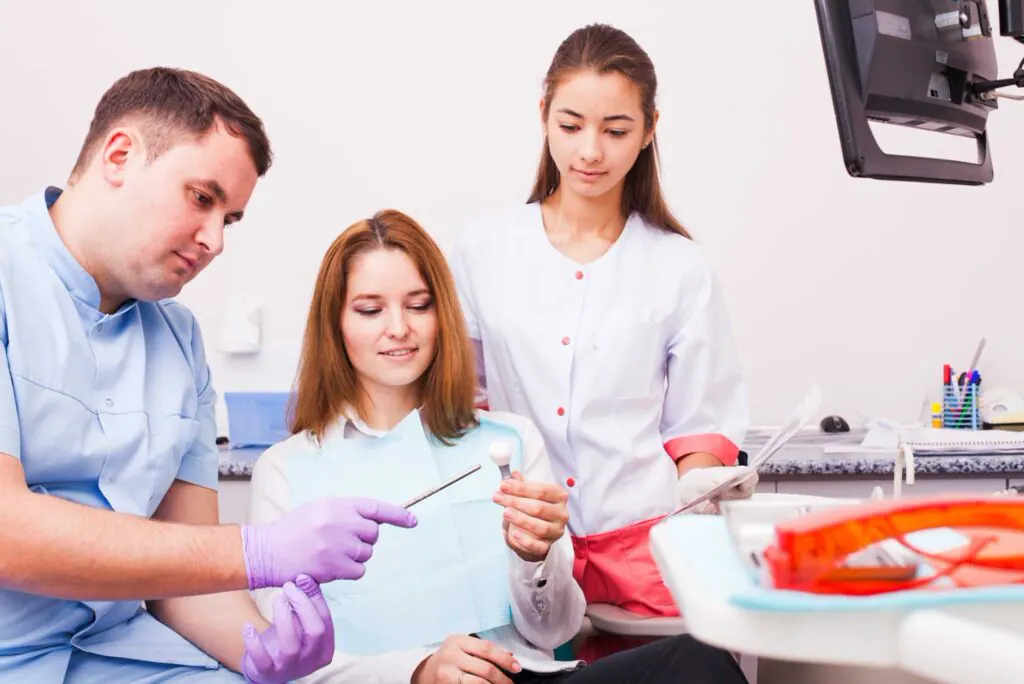
As we know, the dental implant procedure is made up of 3 general phases. A first phase in which various preparatory studies are carried out and the conditions prior to surgery are created according to the individual patient. In this first phase, the conditions and needs of the patients are determined. The second phase is dedicated to fitting the implants through brief outpatient surgery. Finally, the third phase occurs, which is the recovery period, during which the integration process of the implant with the bone must take place.
The third phase, the recovery from dental implants, can take several months. The average time which this phase can take is between 3 and 6 months, although there are those who take longer to complete their recovery. During all the months of recovery, it is necessary to take certain precautions regarding the intake of some foods that could cause the delay or failure of the implant surgery.
The recovery phase begins at the very moment that the dentist has finished performing the surgery to place the dental implant(s). From the point of view of the types of food that should not be eaten with implants, we can highlight 3 different phases in this stage of recovery:
- Postoperative (first 24 hours): The first thing is the dietary restrictions during the recovery stage, that is, the stage that takes place during the first 24 hours after the operation. In reality, the postoperative period can normally be extended to the entire first week.
- Healing (10 to 15 days): Then comes a stage that can last between 10 and 15 days, which is healing. During this time, the wound that was made in the gum to place the dental implants heals.
- Osseointegration (from 3 to 6 months): During this period, the natural integration of the implant with the bone occurs. The success of the treatment to install dental implants depends on this. Due to all the processes that are occurring in the body during this phase, it is still important to take into account recommendations regarding foods that should not be eaten with dental implants.
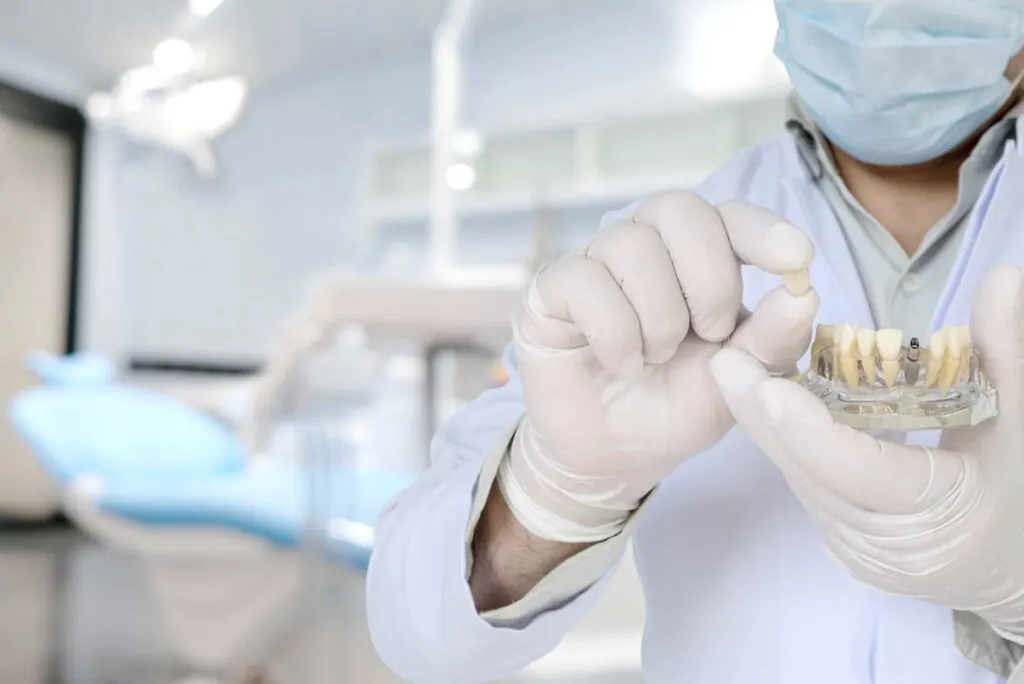
Below we will see, for each of these recovery phases, which foods should not be eaten and which should. Let’s start.
Types of foods that should not be eaten with dental implants according to the recovery phases
In this section, we will examine which foods should not be eaten with dental implants in each of the stages of recovery. We will explain in detail what the foods are, and the reasons why they should not be eaten. Let us remember that achieving optimal recovery will depend on maintaining all the pertinent care taken regarding our diet.
1) Postoperative: Foods that should not be eaten with dental implants during the first 24 hours
Once the patient leaves the operation in which the implants were fitted, the postoperative stage begins, which is the first within the recovery phase. At this stage, you have to eat differently than usual. It is something that is true for all patients equally and does not depend on the type of dental implants that have been fitted. Both the teeth and the jaw are in a delicate state, and to achieve stability in the mouth again, we must follow some essential dietary tips, such as the following.
- Do not eat food during the first 4-5 hours. The first recommendation is not to eat anything until the effect of anesthesia has passed. When the mouth is anesthetized, there is no sensation because the maxillary nerve endings remain numb. It is dangerous to consume food in this state since we can injure ourselves as a result of the same lack of feeling in the mouth. So it is best to wait a couple of hours until the post-surgery anesthesia wears off. In fact, it is recommended to eat only 4 or 5 hours after surgery. During these hours, the mouth will have a basic and necessary rest before consuming food again.
- Avoid hard foods. Once the effect of anesthesia and the minimum hours of rest have passed, we must start by consuming soft foods. The soft diet is the most suitable for the first 24 postoperative hours. Some examples of foods that can be consumed at this stage are:
- Fruit or vegetable smoothies: Fruit or vegetable smoothies are suitable from the first 24 postoperative hours. They provide a good amount of vitamins, antioxidants, trace elements, and other essential nutrients that will help the body restore itself. But the shakes must be completely liquidized, without whole pieces or small fragments that can lodge in the wound. Perhaps the most convenient option is to pass the smoothies through a strainer.
- Puree or creams: Purees, both fruit, and vegetable or tubers will be welcome and very nutritious for patients. This format is very easy to eat because it does not involve chewing and allows the food to be ingested and digested more easily.
- Soups: Soups with neutral, non-acidic ingredients are suitable, always well liquefied in the broth, that is, without hard or large fragments. It is recommended that you use a blender before the soup is consumed by the patient so that all the ingredients are liquefied.
- Meats and vegetables: Meats and vegetables should be included in purees and soups. They can be consumed in a liquefied way by passing them through the blender before consuming them so that they form a paste.
- Yogurts and cereals: Yogurt is a very nutritious and recommended food, which does not offer difficulties with ingestion in this phase of recovery. We recommend consuming those that do not have pieces of fruit inside. In addition, it is possible to consume soft cereals such as oats, wheat, etc.
- Water: Keeping the patient well hydrated is essential for postoperative recovery. Due to this, it is recommended that the patient consume all the water that the body asks for. Even if you are not very thirsty, it is good not to forget to consume at least 1 to 3 liters of water during the first 24 hours.
- Avoid the use of absorbents or straws. This measure is due to the fact that this type of utensil forces the food to be sucked. This exerts pressure inside the mouth that can cause the wound to start bleeding because it removes the clots that are preventing blood from flowing out of the wound. It is also not recommended to drink from bottles.
- Do not eat hot food for 24 hours. It is very important not to consume hot food during the first 24 hours. Hot foods can cause increased sensitivity in the area where dental implants have been fitted. All foods and beverages consumed should be at room temperature or slightly chilled. Cold foods facilitate vasoconstriction, which helps decrease inflammation and bleeding. Some doctors recommend plain ice cream at this stage. However, frozen foods are not recommended, as they can be somewhat difficult to eat.
- Avoid the consumption of alcohol and tobacco. Both alcohol and tobacco are substances that can slow down the healing process. In addition, they make the wound much more susceptible to possible infection, which could compromise the recovery of dental implants.

2) Healing: Foods that should not be eaten with dental implants during the first 2 weeks
The diet begins to change after the first 24 hours. While many of the dietary restrictions remain, there are some changes. At this time, some solid foods can be consumed, but they must have a soft texture. Hard foods should continue to be avoided. Remember that the wound still takes several days to heal and you have to be careful not to hurt yourself.
During this phase, the patient begins to regain the ability to chew, although he may still feel that the dental implants hurt. It is recommended that you chew mainly using the side of the mouth where dental implants have not been fitted. In general, it is important to maintain the consumption of foods rich in protein and essential nutrients. Let’s see what are the indications regarding foods that should not be eaten and those that can be eaten with dental implants in this healing phase.
- Some of the restrictions on foods that should not be eaten with dental implants in the first 24 hours remain. For example: avoid grains and hard seeds, do not consume alcohol or tobacco, do not eat crunchy, sticky, acidic, or spicy foods, and minimize the consumption of sugars.
- Soft-textured solid foods such as eggs, boiled potatoes, chicken, fish, and ground meat can begin. In general, even if there are some solids, all foods should be finely chopped so that the patient does not have to exert much effort when chewing.
- Dairy products such as milk and cheese (preferably soft) can be incorporated into the diet, in addition to maintaining the intake of yogurt.
- Absorbents or straws can now be used. Foods with a certain level of heat can be consumed, but they must not be too hot.
- We proceed with normal brushing of the teeth, although always avoid brushing the area of the wound hard. If the patient requires more detailed instructions on the subject of brushing, your dentist can give them in a more personalized way.
3) Osseointegration: foods that should not be eaten with dental implants for the next 3 to 6 months
In this third phase, the recommendations regarding foods that should not be eaten with dental implants are quite relaxed. We are now in the osseointegration stage, which is when the implant integrates with the bone, in which it will create the root to install the future dental prosthesis. For this reason, it is still essential to maintain some dietary restrictions.
- It is advisable to consume foods with vitamins C and D. Recent scientific studies have shown that the presence of these two vitamins favors the process of assimilation of dental implants by the bone. For this, it is recommended, in addition to sunbathing at least 10 minutes a day (since sunlight is a source of vitamin D), to consume the following foods: mackerel, sockeye salmon, sardines, tuna, shellfish, cod liver, milk, eggs, mushrooms, among others.
- It is still important to avoid smoking and ingesting alcohol, to maintain the good health of the implant and promote its fusion with the bone.
- We must continue to avoid very hard foods, such as seeds, crunchy foods, and nougat.
- In general, foods that are not so soft can be consumed, as long as we consult our dentist.
- Sweet foods can be eaten, as long as they are not very hard and sticky. It is also still recommended not to abuse sugar.
- Hot foods can be eaten, as there is no risk of bleeding.
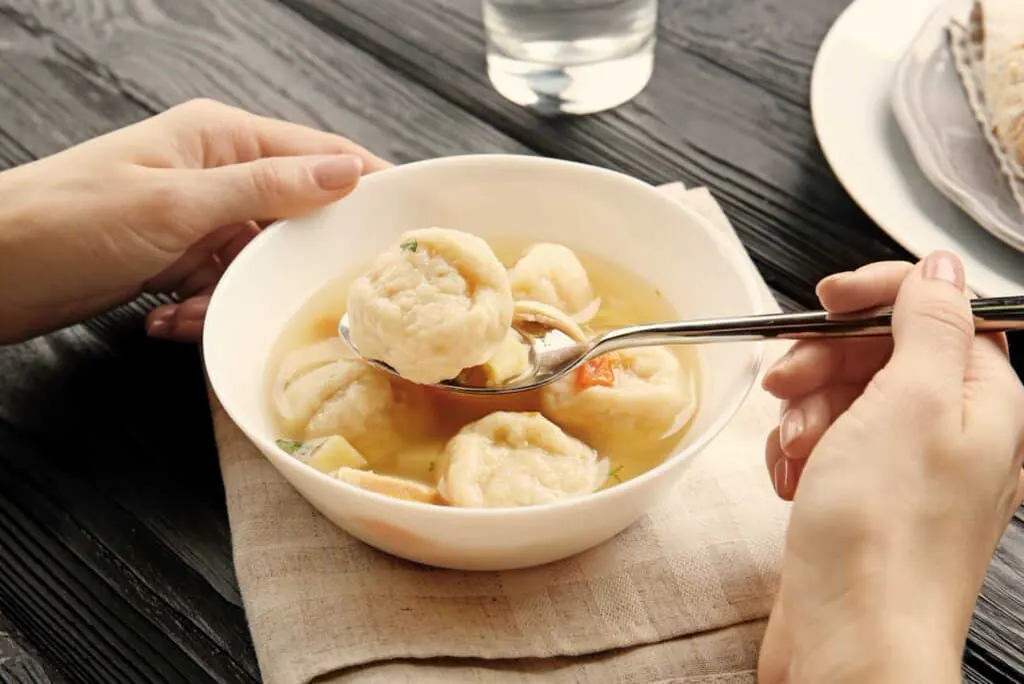
Examples of foods that should not be eaten with dental implants in the recovery phases:
To be even clearer, here are some examples of foods that should not be eaten in the first 24 hours after the operation to place dental implants:
- Grains or seeds: Hard-grain foods or seeds should be avoided as they can hurt the wound and weaken dental implants. Examples: hazelnuts, almonds, peanuts, walnuts, beans, etc.
- Hot drinks or foods: It is advisable to avoid hot foods, so as not to cause vasodilation and prevent the wound from bleeding again. Examples: hot soups or purees, hot chocolates, hot coffee, hot cereals, etc.
- Spicy foods: In the postoperative phase the gums are inflamed and very sensitive. It is for this reason that the patient should avoid foods that can irritate the gums, and spicy foods are a typical example of this. Spicy foods should be avoided both in sauces and in fruit.
- Crunchy foods: Crunchy foods should be avoided, since they can get lodged between the gum and the implant, in addition to causing injuries. Examples: popcorn, French fries, pork rinds, hard vegetables, nougat, candy, etc.
- Sugars: It is also important not to consume foods that are high in sugars. This is because during the first 24 hours it is not possible to carry out brushing to maintain good oral hygiene.
- Acidic foods: Like spicy foods, we must avoid consuming acidic foods in this phase. These types of foods have an acidic pH that decreases the protective capabilities of the immune system, which can lead to infections. Examples: citrus, tomatoes, sugars, etc.
- Sticky foods: Here we include some processed foods that are usually sweet. These types of foods can get stuck in the implants and can impair wound healing. Some of them are even hard to bite and chew. Examples: candy, canned fruit, chocolate-dipped raisins, gummies, chocolate bars, etc.
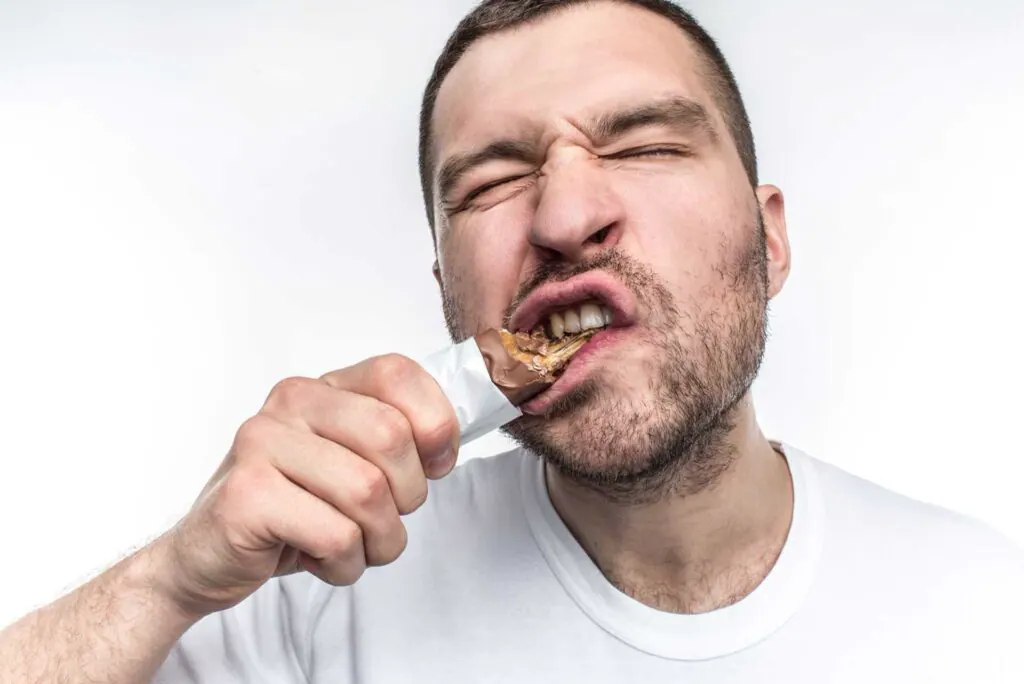
Maintenance: final and definitive stage of dental implants
Finally, we must talk about the maintenance stage. This is the moment when the crowns or definitive prostheses have been installed on the implants. At this time, the patient already enjoys teeth that are very similar to their natural ones, especially after adapting to it, which happens soon. At this point many wonders: Will I be able to eat normally again? And the answer is yes. Thanks to dental implants, the prostheses will function like natural teeth.
The basis of being able to enjoy teeth with implants at this stage is to have maintained good care throughout all the previous stages. That care has allowed each of the objectives to be achieved: postoperative recovery, healing, and osseointegration. Without complying with all the restrictions on foods that should not be eaten in the previous phases, it will be impossible to reach this final stage well.
The objective in this final and definitive stage is to maintain the good health of the dental implants through basic care so that the prostheses can perform their function correctly. It can be said that at this time the patients follow a normal diet since there are no dietary restrictions. However, to ensure good maintenance, some recommendations are made, such as the following:
- Can you eat nuts with dental implants? We must avoid chewing food that is too hard. This is done in order to protect the health of the dental implant. Chewing very hard foods (such as nuts) can cause the implant to fracture. If we want to eat hard foods, such as almonds, walnuts, hazelnuts, peanuts, nougat, candies, etc., we must crush them outside the mouth, so that the prosthesis does not make the full chewing effort. Even so, it is important to chew carefully and without haste. Eat them little by little and do not put many pieces in one mouthful.
- Can you eat popcorn with dental implants? With popcorn, the same situation occurs as with dried fruit. Popcorn is a type of food that has a soft part that will not offer any problem. However, it has hard central seeds, which can cause the implant to fracture. If the person with implants wants to consume popcorn, they should be cautious and chew it gently, always avoiding the hard area.
- Reducing the consumption of sugary foods will help maintain oral health. Although crowns, due to their artificial material, are prone to not harboring bacteria that cause cavities (they are even less prone than natural teeth), it is good to take care of the base of the crowns, which is the place where they join with the implant. You can eat sweet foods, but you should not consume them excessively.
- Avoid smoking and alcohol. This measure must continue to be maintained if the patient wants the implants to have a long life. Tobacco and alcohol, over time, destroy the gums and dental bones. Excessive consumption of them could damage the health of dental implants.
- Maintain good hygiene and make frequent visits to the dentist. Hygiene is very important to ensure good health in dental implants and crowns. Brushing several times a day, mouthwashes or rinses, and interdental cleaning is essential. Likewise, it is recommended to visit the dentist with the indicated frequency, so that you can verify that everything is going well. In the case of fixed crowns, the goal of regular visits to the dentist is also to have the specialist perform a thorough cleaning. It is due to these good habits that the patient will have prosthetics on implants for many years.
- As we discussed earlier in this article, consuming foods rich in vitamin D is one way to maintain the health of dental implants.
Your new smile starts with one visit.
Tell us what you would like to change and one of our doctors replies within 24 hours on working days.
- Phone
- 786 981 0655
- Emergencies
- 305 204 9231
- Hours
- Monday–Friday, 9 AM–6 PM. Saturday and Sunday closed.
Online consultation
Send us photos of your smile
Fill out the online consultation form, attach your photos and one of our doctors replies within 24 hours on working days.
Start your online consultation