

Cosmetic dentistry in Doral, Miami
Veneers in Miami, and how to choose the type
We place veneers in Miami in two materials, porcelain and composite resin, and the right one depends on your teeth, your bite and how long you want the result to last. Porcelain lasts longer and costs more. Composite needs less enamel and costs less to start.
- Materials
- Porcelain or composite
- Porcelain set from
- $5,500
- Consultation
- Free
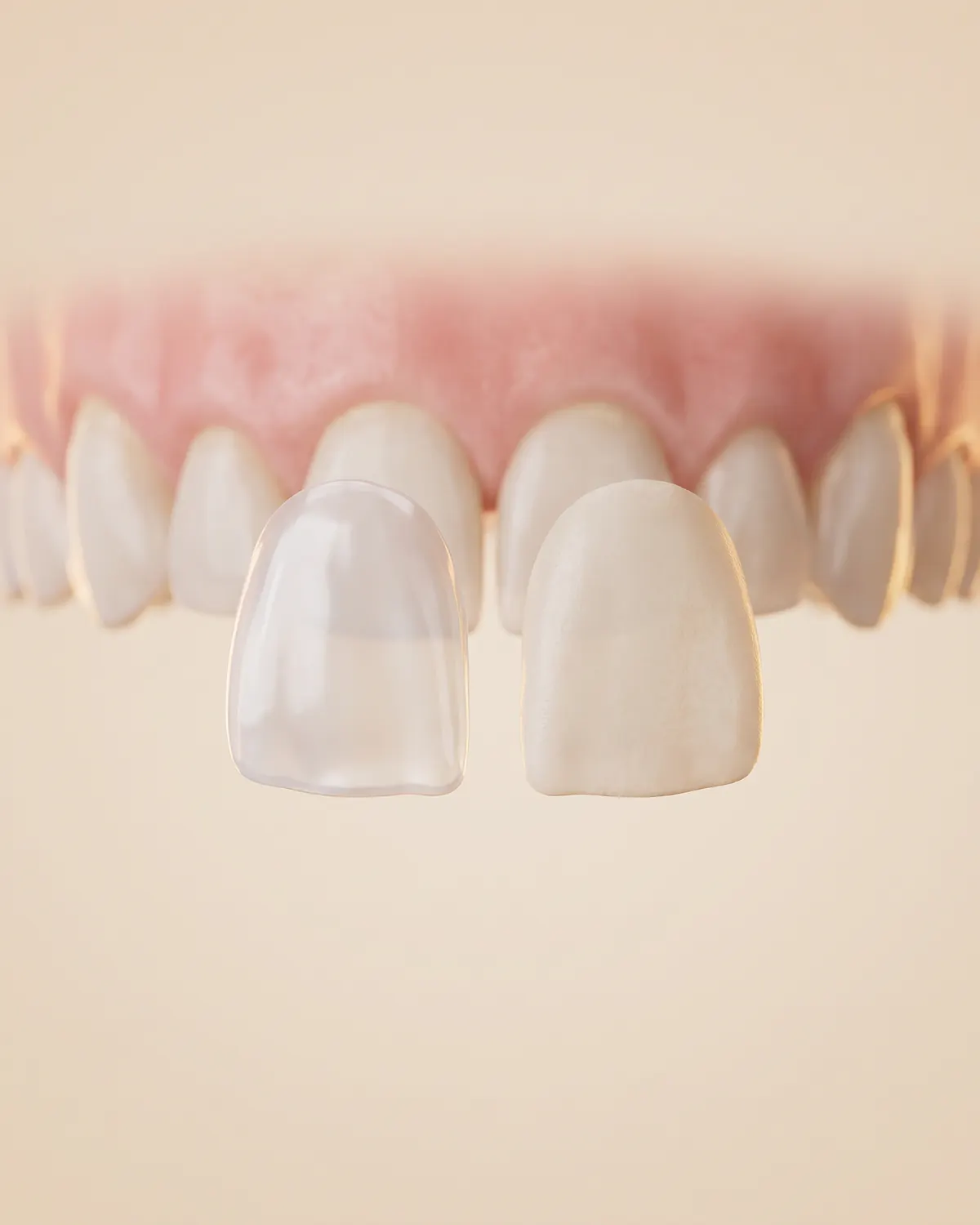
What veneers are, and the main types
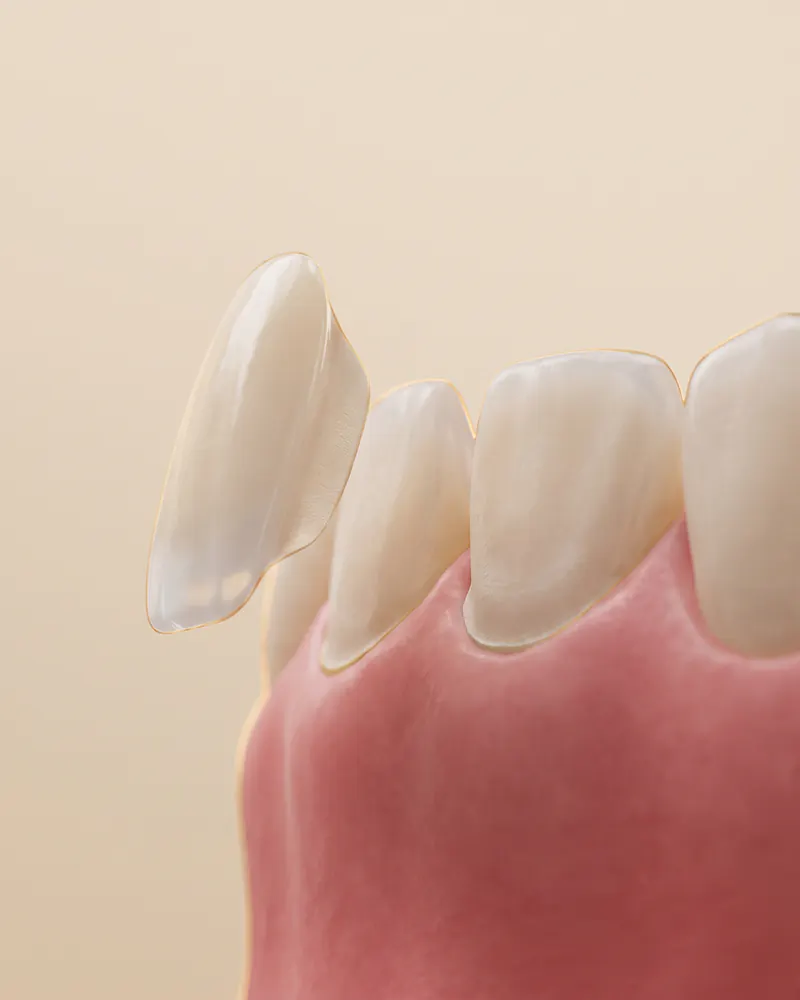
A veneer is a thin, tooth-colored layer fixed to the front of a tooth to change its color, shape or length. Unlike a crown, it doesn't cover the whole tooth. Every type below does the same job. They differ in what they are made of, how much of your enamel they need and how long they hold up.
Porcelain veneers are made in a lab from a scan or impression of your teeth, then bonded on at a second visit. Dentists use several ceramics. Lithium disilicate is the more translucent one and is often chosen for front teeth. Zirconia is stronger but more opaque, which helps when a dark tooth has to be hidden. Our porcelain veneers are made by our in-house ceramists.
Composite veneers are tooth-colored resin, the same material used for bonding, shaped directly on the tooth. They may need less enamel removed and fewer visits, and they are easier to repair. They don't resist stains or wear as well as porcelain. Our composite veneers page covers them in detail.
No-prep and minimal-prep veneers are very thin porcelain shells that need less enamel removed, though usually still some. They suit only certain teeth, so the doctor decides case by case. Snap-on veneers are removable covers. Cleveland Clinic notes they can make eating harder and affect speech, and research on them is limited.
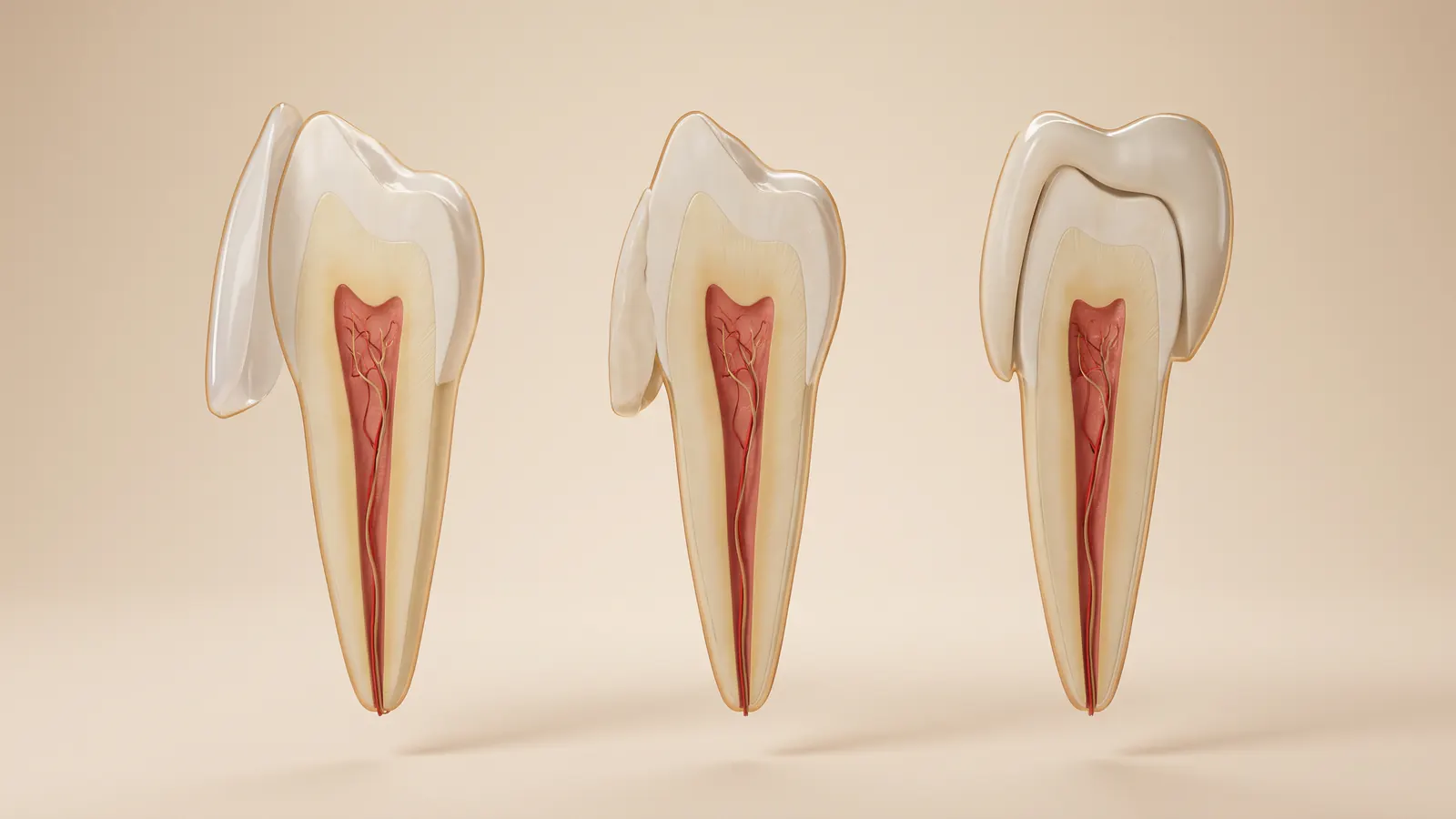
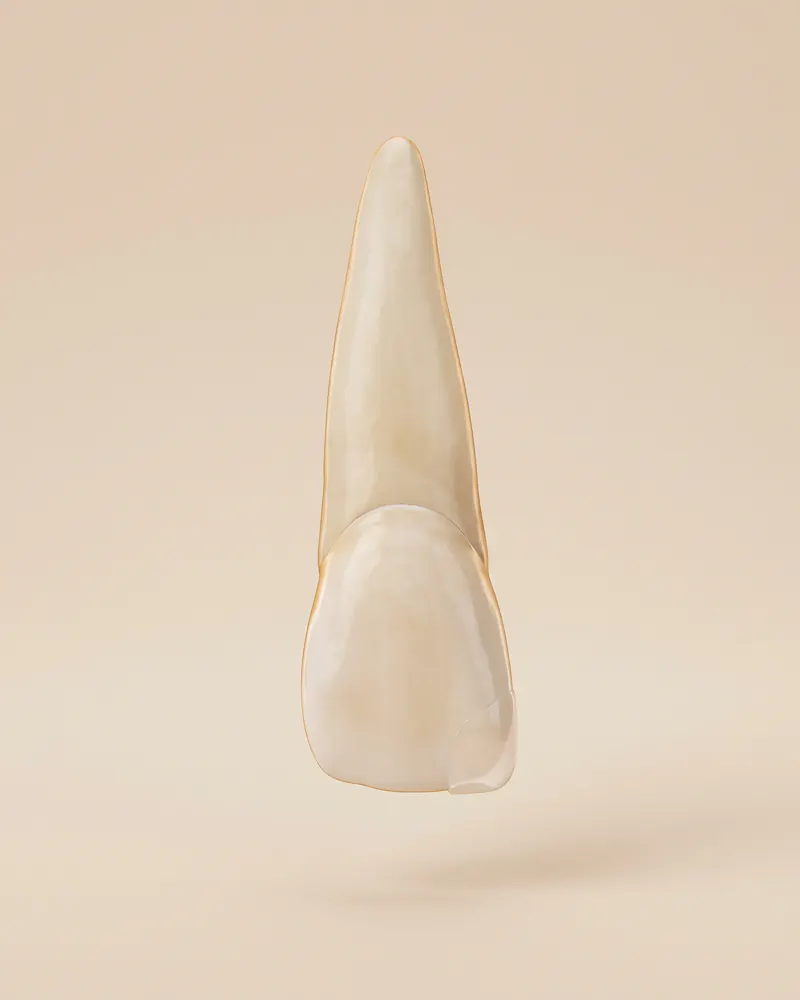
- Porcelain veneer. Made in a lab and bonded to the front of the tooth after a small amount of enamel is removed.
- Composite veneer. Tooth-colored resin shaped directly on the front of the tooth, often with less enamel removed.
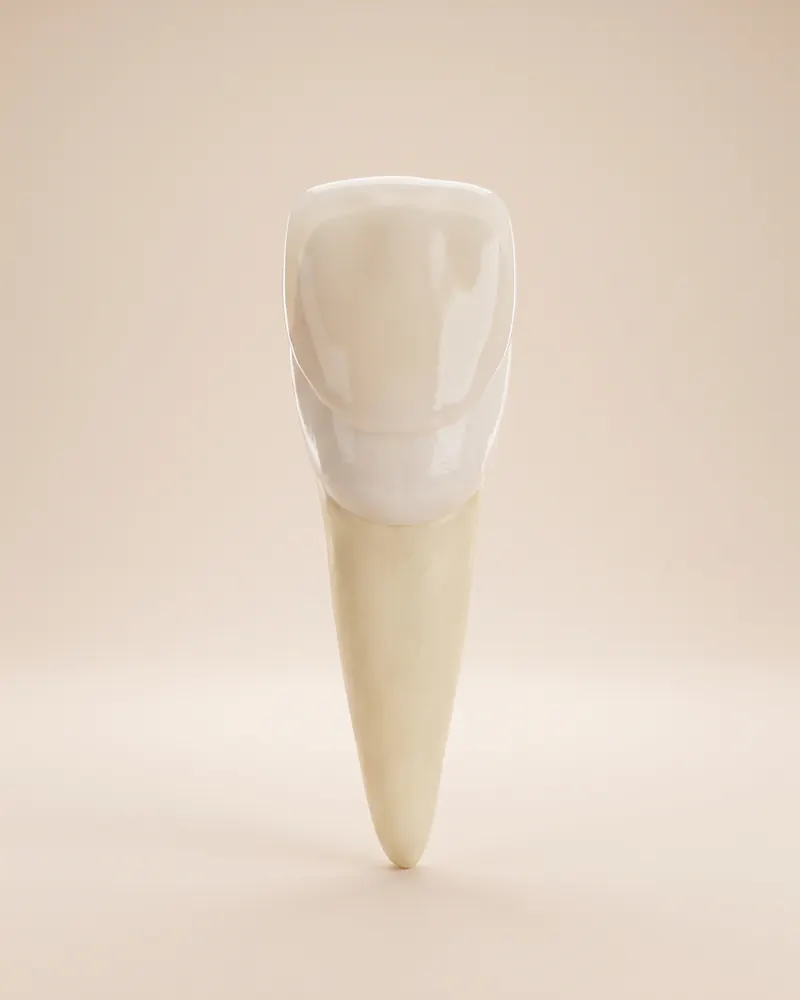
- Crown. A cap that covers the whole tooth, used when a tooth is too damaged for a veneer.
- Tooth under a crown. Trimmed on all sides to make room for the crown, so it loses more of its structure than a tooth prepared for a veneer.
Which type fits which goal
Start from the result you want. The material follows from that and from the state of your teeth.
- A full smile change that lasts. Porcelain. It keeps its color and surface for years and suits a set of 10 or 20 teeth designed together.
- A first change, with as little drilling as possible. Composite, or a minimal-prep porcelain design if your teeth allow it.
- One chipped or uneven tooth. Often bonding, which is composite on a single tooth and can be done in one visit.
- A dark or heavily stained tooth. Usually porcelain. A more opaque ceramic such as zirconia can hide a very dark tooth.
- A tighter budget today. Composite costs less to start. Plan for polishing, repairs and replacement sooner than porcelain.
- A look for one event, with no change to your teeth. Snap-on veneers exist, but they are removable covers, not a dental treatment.
When we suggest something else. If color is the only issue, whitening may be enough. Badly crowded teeth usually need orthodontics. Cavities and gum disease have to be treated before any veneer, and heavy grinding or a deep overbite can rule veneers out or call for a night guard.
How we choose the type with you
The choice is made at the consultation, with your teeth in front of the doctor.
-
Photos first, if you like
Send photographs through our online consultation and one of our doctors tells you which types are realistic for your teeth and roughly what each would cost.
Before you book, optional
-
Exam and goal
Exam, X-rays and photographs. We check enamel, gums and bite, and ask what bothers you about your smile. That answer often narrows the choice to one material.
First visit
-
Design and decision
We design the shape and shade and show you a preview. You see what each option means for your enamel, your number of visits and your budget, then decide.
First visit
-
Treatment
Composite is shaped on your teeth in the chair, often in one visit. Porcelain is prepared at the first visit and bonded at the second, after our ceramists make it.
One or two visits
Real smiles from our patients
Drag to compare. Patients of Miami Perfect Smile, as published on our original site.
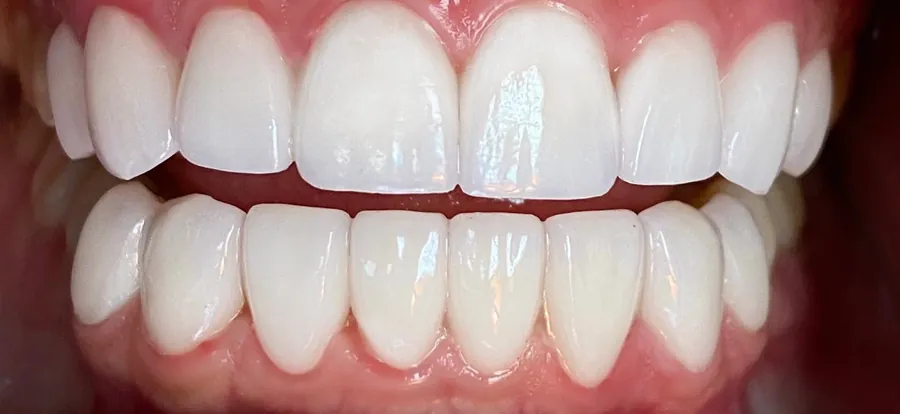
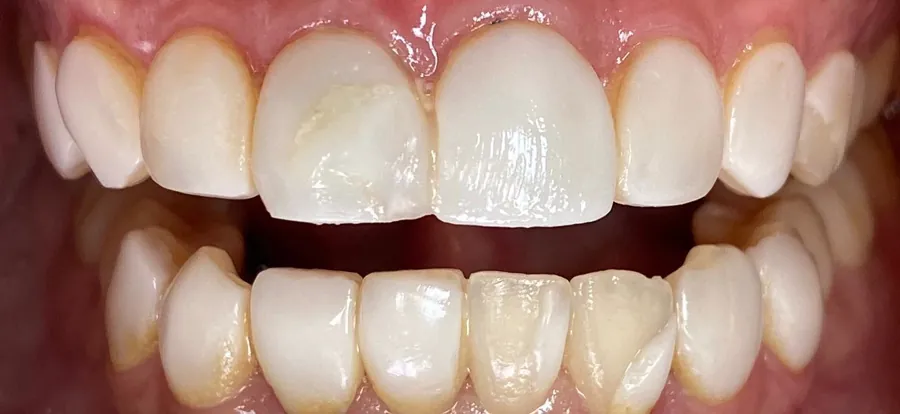 Before
After
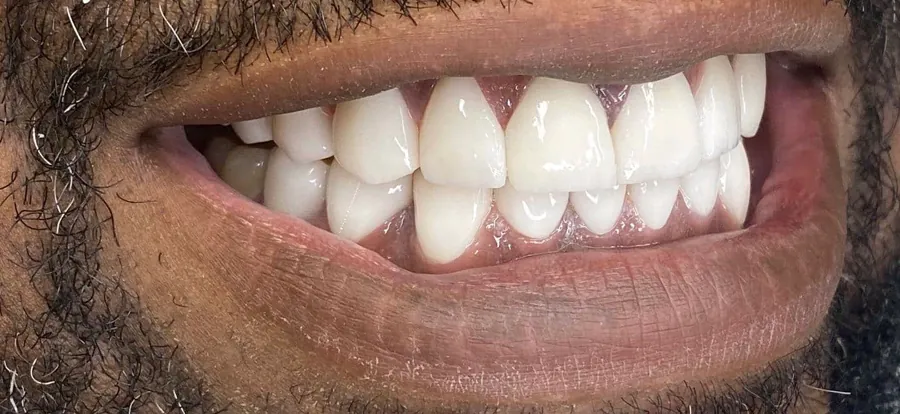
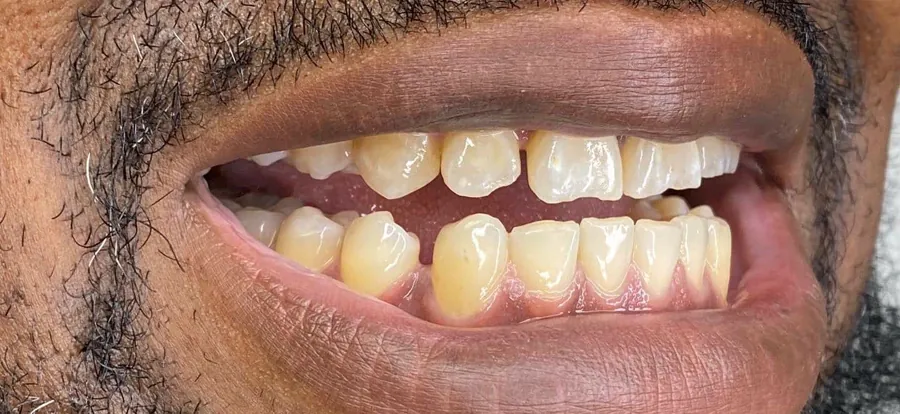 Before
After
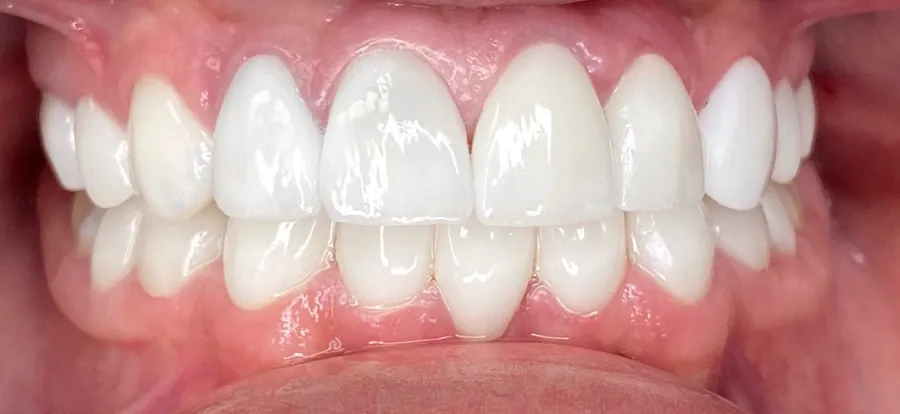
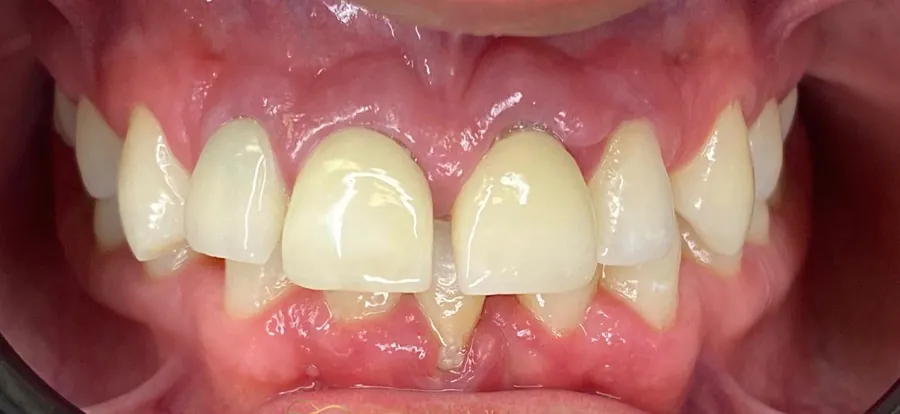 Before
After
Results vary from case to case.
What veneers in Miami cost
The material sets most of the price. Porcelain costs more because each veneer is made in a lab and the process takes two visits. Composite costs less at the start and needs touch-ups sooner.
Our porcelain smile makeover has published starting prices, listed here. Composite veneers and smaller porcelain cases are priced at your consultation, once we know how many teeth are involved and whether anything needs treatment first.
Veneers placed for looks are usually not covered by dental insurance. We accept insurance for the care your plan covers.
- Porcelain, upper arch, 10 veneers
- from $5,500
- Porcelain, lower arch, 10 veneers
- from $4,500
- Porcelain, both arches, 20 veneers
- from $9,000
Porcelain from $209 a month with financing. Composite veneers are priced at your consultation.
- Free veneer consultation
- Financing with CareCredit and Alphaeon Credit
- Insurance accepted for covered care
Porcelain or composite?
| Porcelain | Composite | |
|---|---|---|
| How it is made | In a lab, from a scan or impression | Shaped on the tooth in the chair |
| Enamel removed | A small amount from the front and sides | Often less, sometimes none |
| Visits | Two | Often one |
| Lifespan | Usually 10 to 15 years with care | Shorter; needs polishing and repairs |
| Stains | Resists stains better than enamel | Picks up stains more easily |
| If it chips | Usually replaced | Usually repaired in the chair |
| Cost | Higher | Lower |
Recovery and aftercare
- No downtime with either type. You can go back to normal activities the same day. Eat once any numbness wears off.
- Sensitivity may come and go. Teeth that were prepared can be sensitive to hot and cold for a while.
- Same cleaning routine. Brush twice a day with a soft brush and a nonabrasive fluoride toothpaste, and clean between the teeth daily.
- Go easy on staining drinks. Coffee, tea and red wine mark composite faster than porcelain. Rinse with water after them.
- Protect the edges. Don't bite ice, pens or nails, and wear a mouthguard for contact sports.
- Polishing for composite. At your check-ups we polish composite veneers and fix small chips before they spread.
What patients ask before deciding
How long do veneers last?
Porcelain veneers usually last 10 to 15 years with good care. Composite veneers wear and stain sooner and need more frequent polishing and repairs. In both cases, grinding and biting hard objects shorten their life.
Why do some dentists advise against veneers?
Because they aren't right for every mouth. Most veneers require removing some enamel, which can't be reversed. They are a poor fit for teeth with active decay or gum disease, and for people who grind heavily, unless that is treated first.
What is a cheaper option than veneers?
Whitening if the problem is color, bonding if one or two teeth are chipped or uneven, and composite veneers if you want several teeth changed at a lower starting cost than porcelain.
How much will 4 veneers cost?
It depends on the material and the teeth. We publish starting prices for full arches of porcelain: from $5,500 for 10 upper veneers. Smaller cases, and all composite cases, are priced at your consultation.
What happens after 10 years of having veneers?
Many porcelain veneers are still in good shape at ten years. Some need replacing because an edge has chipped, the bond has failed or the gum line has changed. Because enamel was removed, a worn veneer is replaced with a new one, not taken off.
Can veneers fix crooked teeth?
They can hide mildly crooked teeth. They don't move teeth, so if yours need real alignment, braces or clear aligners are usually the better first step.
Do veneers stop cavities?
No. The veneer itself doesn't decay, but the tooth under and around it can. Brushing, cleaning between the teeth and regular check-ups still matter.
Related treatments
Your new smile starts with one visit.
Tell us what you would like to change and one of our doctors replies within 24 hours on working days.
- Phone
- 786 981 0655
- Emergencies
- 305 204 9231
- Hours
- Monday–Friday, 9 AM–6 PM. Saturday and Sunday closed.
Online consultation
Send us photos of your smile
Fill out the online consultation form, attach your photos and one of our doctors replies within 24 hours on working days.
Start your online consultation