
General and cosmetic dentistry in Doral, Miami
Laser dentistry in Miami, used where it helps
Laser dentistry in Miami, at our Doral office, means treating teeth and gums with a narrow beam of light instead of a drill or scalpel, or alongside them. We use it whenever your case allows, and we tell you plainly when a laser would add nothing but cost.
- Equipment
- Meets FDA standards
- Numbing
- Decided case by case
- First consultation
- Free
What laser dentistry is
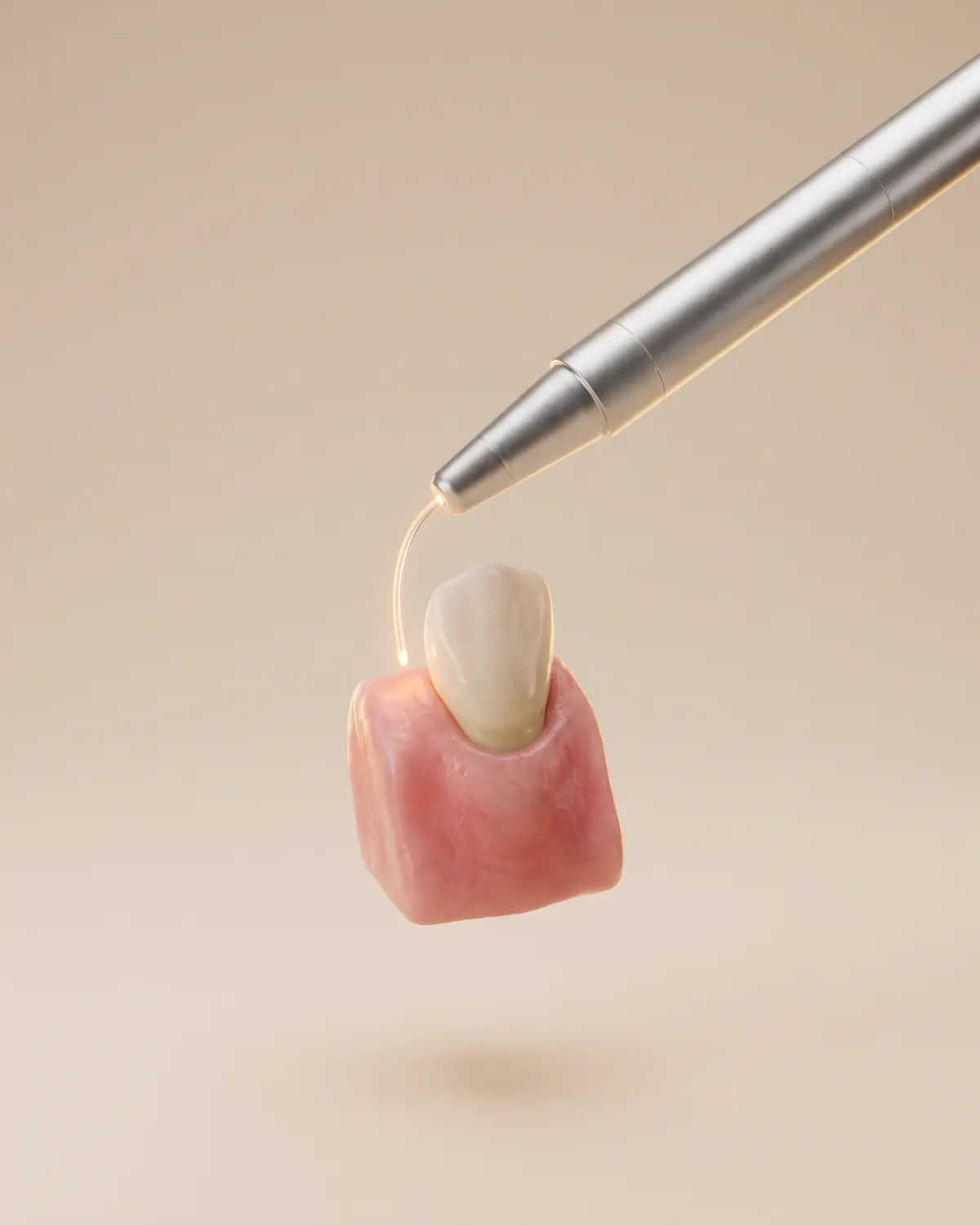
A dental laser sends out light of a single wavelength in a tight beam. The tissue it touches absorbs that energy as heat, and the heat can cut it, vaporize it or seal it. Which tissue absorbs the light depends on the wavelength, so dentists work with two families of lasers.
Soft tissue lasers, such as diode and CO2 lasers, are used on the gums and the inside of the mouth. They seal small blood vessels as they cut, so there is usually less bleeding. Hard tissue lasers, mostly from the erbium family, are absorbed by water and by the mineral in enamel and bone. That is what lets them remove decay and prepare a tooth for a filling.
Lasers have been in dental use since the FDA first cleared them in the 1990s, and every device is cleared for its own list of procedures. Our laser equipment meets FDA standards and we use each device only for what it is meant to do. A laser works alongside the drill and the scalpel; it does not replace them. Cleveland Clinic points out that most dental procedures do not need one at all.
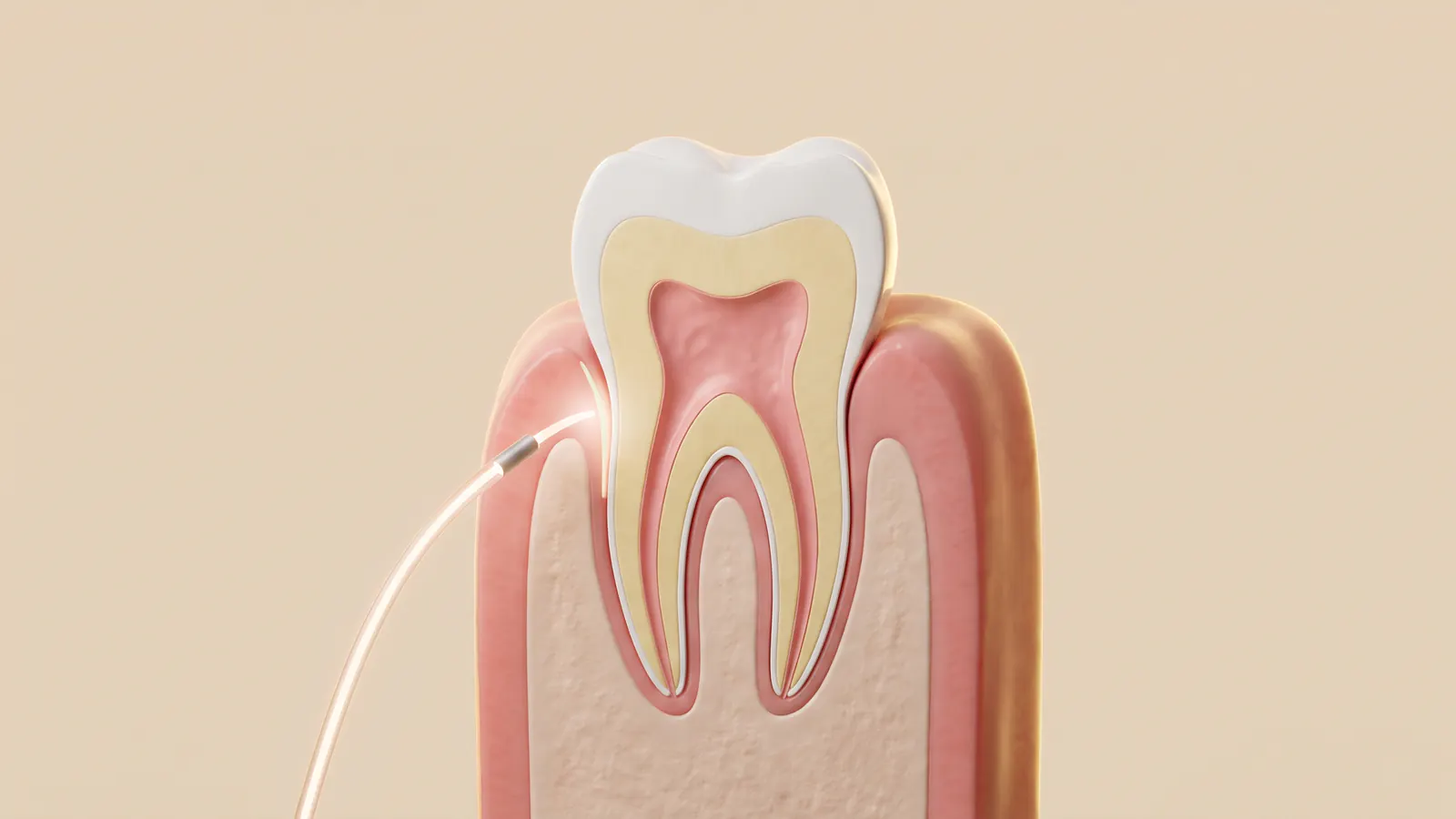
- Laser fiber tip. Delivers the beam to a small spot. On soft tissue it seals small vessels as it cuts.
- Gum tissue. Where soft tissue lasers work: trimming extra gum, or removing inflamed tissue in the pocket alongside a deep cleaning.
- Enamel. The hard outer layer. Erbium lasers are absorbed by its water and mineral, which lets them remove early decay.
- Dentin. The layer under the enamel. When it is exposed, a laser can seal it to ease sensitivity.
- Pulp. The nerve and blood supply. The wrong power or wavelength can injure it, which is why settings and training matter.
Where a laser can help
These are the common uses of dental lasers. Whether one suits your tooth or your gums is decided at the exam.
- Small cavities. An erbium laser can remove early decay and prepare the tooth for a composite filling, with less noise and vibration than a drill. Deeper decay usually still needs conventional instruments.
- Teeth whitening. A laser does not whiten teeth by itself. It warms the whitening gel so the gel works faster during an in-office session.
- Gum disease. A laser can remove inflamed tissue inside the gum pocket as an addition to a deep cleaning. The American Academy of Periodontology found no clear evidence that it beats standard treatment, so we treat it as an extra, never a substitute.
- Gum reshaping. Extra gum tissue can be trimmed and recontoured with a soft tissue laser, usually with less bleeding than a scalpel. Our page on gummy smile treatment explains when that is worth doing.
- Tongue and lip ties. A tight frenulum, the small fold under the tongue or inside the lip, can be released with a laser, often without stitches.
- Sensitivity and small lesions. Lasers can seal exposed dentin to ease sensitive teeth, and can remove some benign growths on the gums or cheeks, including tissue sent for a biopsy.
When we suggest something else. A laser cannot be used on a tooth with a metal amalgam filling, and it is the wrong tool for large cavities. Drills are still needed to shape, adjust and polish many fillings. In those cases we use conventional instruments, and if a laser would only make the visit more expensive, we tell you.
How a laser appointment works
The order is the same as any treatment, plus a few safety steps that only lasers need.
-
Exam and plan
We examine the tooth or gum, take X-rays when they are needed and decide whether a laser suits your case. You see the plan and its cost before anything is done.
First visit
-
Protection
Everyone in the room wears safety glasses made for that laser, you included. We cover the tissue that should not be treated, keep mirrors and other reflective instruments out of the beam, and use equipment that takes several steps to switch on, so it cannot fire by accident.
Before treatment
-
Numbing, if you need it
Some small gum procedures need only a numbing gel. Many treatments still need a local anesthetic, just as they would with a drill. We tell you which applies to you before we start.
Same visit
-
Treatment
The laser works on a small area at a time. On gum tissue it seals small vessels as it goes, so bleeding is usually limited. A drill may still be used at the end to shape or polish a filling.
Same visit
-
Healing check
After gum work we see you again to check how the tissue is healing. For a filling, we check it at your next routine visit.
Follow-up visit
What laser dentistry costs in Miami
There is no single price for laser dentistry, because the laser is an instrument, not a treatment. Laser-assisted whitening is priced differently from treating decay, and we quote each at your consultation. Dental insurance usually pays according to the treatment itself, not the tool used to do it, so check what your plan covers for the procedure you need.
What changes the price
- The treatment. A filling, gum therapy, whitening and a frenulum release are each priced separately.
- How much is treated. The number of teeth, or how much gum tissue is involved.
- Laser alone or combined. Some cases need conventional instruments as well.
- Your insurance. What your plan pays for that procedure.
Priced at your consultation, with financing available.
- Free first consultation
- Financing available
- Insurance accepted for covered care
Laser or conventional tools?
| Dental laser | Drill and scalpel | |
|---|---|---|
| Noise and vibration | Little | The familiar whine and vibration |
| Bleeding in gum work | Usually less, because the beam seals small vessels | More, and stitches are more often needed |
| Numbing | Sometimes less is needed; many procedures still need it | Local anesthetic for most fillings |
| Teeth with metal fillings | Cannot be used | Can be used |
| Large cavities | Limited | The standard tool |
| Evidence for decay removal | Low-certainty evidence of less pain; fillings last about as long | Decades of use |
Recovery and aftercare
- After gum work. The area may be tender for a few days. Choose soft, lukewarm food and skip spicy or crunchy food while it heals.
- Keep it clean. Brush gently around the treated area. We tell you when to go back to flossing there as usual.
- After a filling. Mild sensitivity to cold or pressure is common and usually fades within a week or two.
- Pain relief. If you need something for discomfort, ask us what to take and how much.
- When to call us. Swelling, fever, bleeding that does not stop, or pain that gets worse instead of better.
- Keep the follow-up. The healing check is where we confirm the result, so do not skip it.
What patients ask before deciding
Is laser dentistry better than regular dentistry?
Not for everything. For some gum procedures it often means less bleeding and fewer stitches. For decay, a Cochrane review found low-certainty evidence that lasers cause less pain and need less anesthetic, and no difference in how long the fillings last. We choose the tool that suits the tooth.
Does laser dentistry hurt?
It can feel easier than a drill on suitable cases, with less vibration and noise, but it is not painless. As with a drill, you get numbing when the procedure calls for it, and many laser procedures still do. Some small gum procedures need only a numbing gel.
What are the downsides of laser dentistry?
A laser cannot be used on teeth with metal fillings, it does not suit every procedure, and a drill is often still needed to shape and polish a filling. The wrong power or wavelength can injure the gums or the nerve of the tooth, which is why training and the right settings matter.
How much does laser dental treatment cost?
It depends on the treatment, not on the laser. Whitening, a filling and gum therapy each have their own fee, which we give you at your consultation. Insurance usually pays according to the procedure, whatever instrument is used, and financing is available.
Who should not have laser dental treatment?
A laser is not an option on a tooth with an amalgam filling, and it is a poor choice for large cavities. Whether it suits a gum or frenulum procedure depends on the tissue around it, which we check at the exam. Tell us about your health conditions and medicines so we can plan safely.
Is laser dentistry safe?
The risks are small when the laser is used correctly. The main hazard is to the eyes, so everyone in the room wears protective glasses. Any tool that cuts with heat can harm healthy tissue if misused, which is why we shield what should not be treated.
Do you use lasers for teeth whitening?
Yes, when it suits the case. The laser speeds up the whitening gel; it does not whiten teeth by itself. Our teeth whitening page explains the in-office and at-home options.
Related treatments
Your new smile starts with one visit.
Tell us what you would like to change and one of our doctors replies within 24 hours on working days.
- Phone
- 786 981 0655
- Emergencies
- 305 204 9231
- Hours
- Monday–Friday, 9 AM–6 PM. Saturday and Sunday closed.
Online consultation
Send us photos of your smile
Fill out the online consultation form, attach your photos and one of our doctors replies within 24 hours on working days.
Start your online consultation