
Restorative dentistry in Doral, Miami
Mini dental implants in Miami, for a denture that stays put
Mini dental implants are narrow titanium posts, less than 3 mm wide, that most often hold a lower denture in place so it stops slipping when you talk and eat. Because they are thin, they can fit where the jawbone is too narrow for a standard implant without a graft.
- Post width
- Under 3 mm
- Most common use
- Holding a denture
- First consultation
- Complimentary
What mini dental implants are
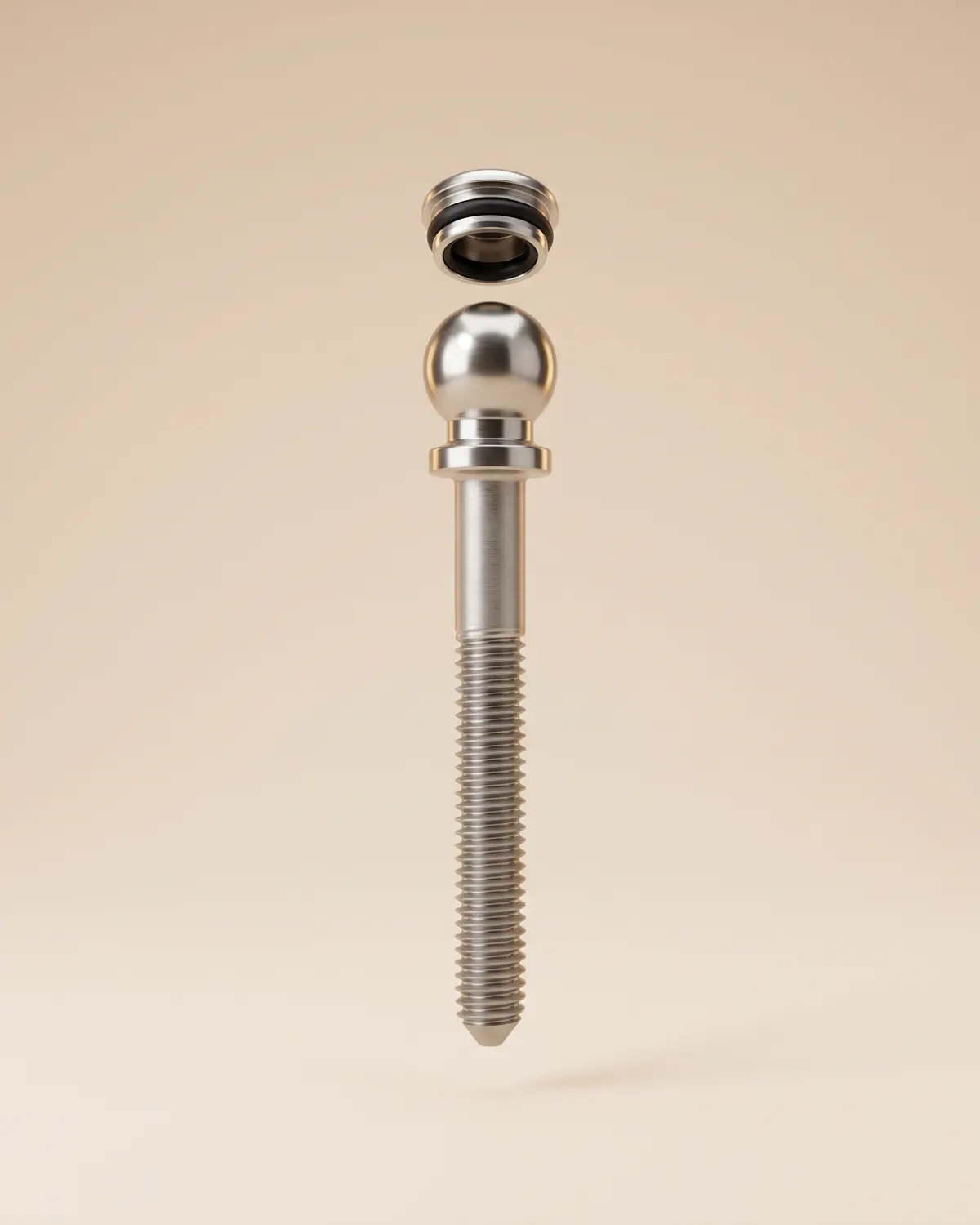
A mini implant is usually a single piece of titanium between about 1.8 and 2.9 mm wide. The post and the head that holds the denture are one part, so there is no separate abutment. A standard implant is wider and made in two or more parts.
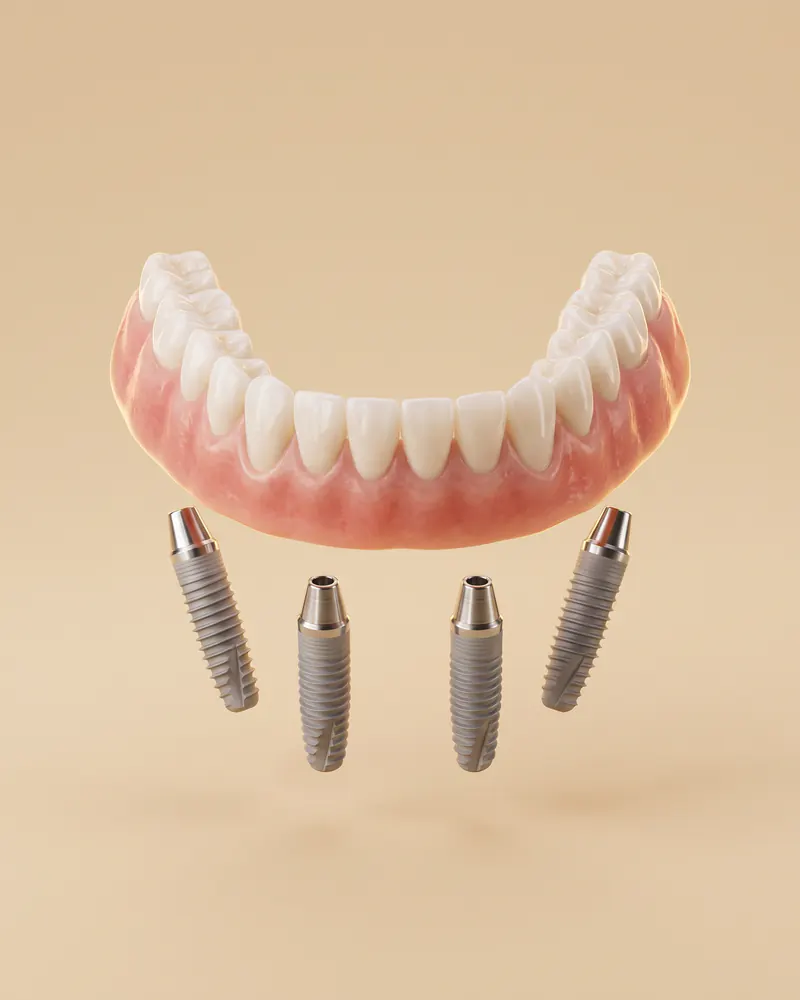
For a denture, the dentist places the posts in the jaw, often through a small opening in the gum instead of a cut, and fits small housings with replaceable inserts inside the denture. The denture then snaps onto the heads of the implants and unsnaps when you take it out to clean. When the posts are firm in the bone on the day, the denture can often be attached the same day.
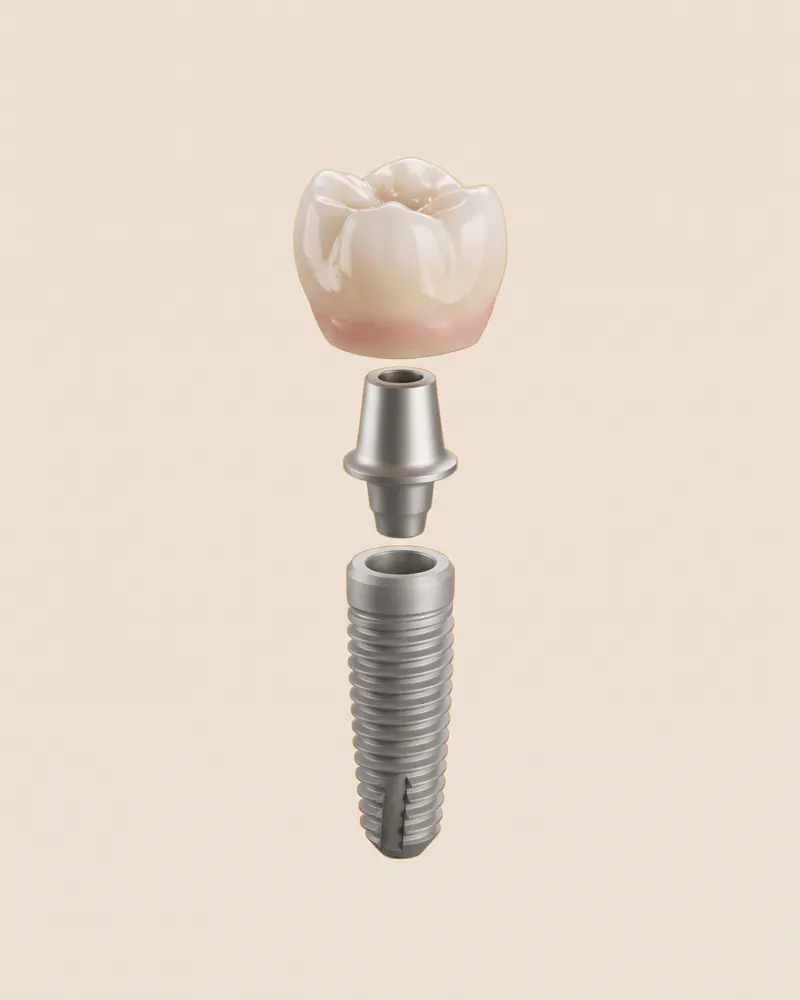
Mini implants have also been used for single narrow teeth, such as a lower front tooth or an upper lateral incisor, where there is not enough space for a standard post. For most other single teeth, especially back teeth that take heavy chewing forces, a standard dental implant is the stronger choice.
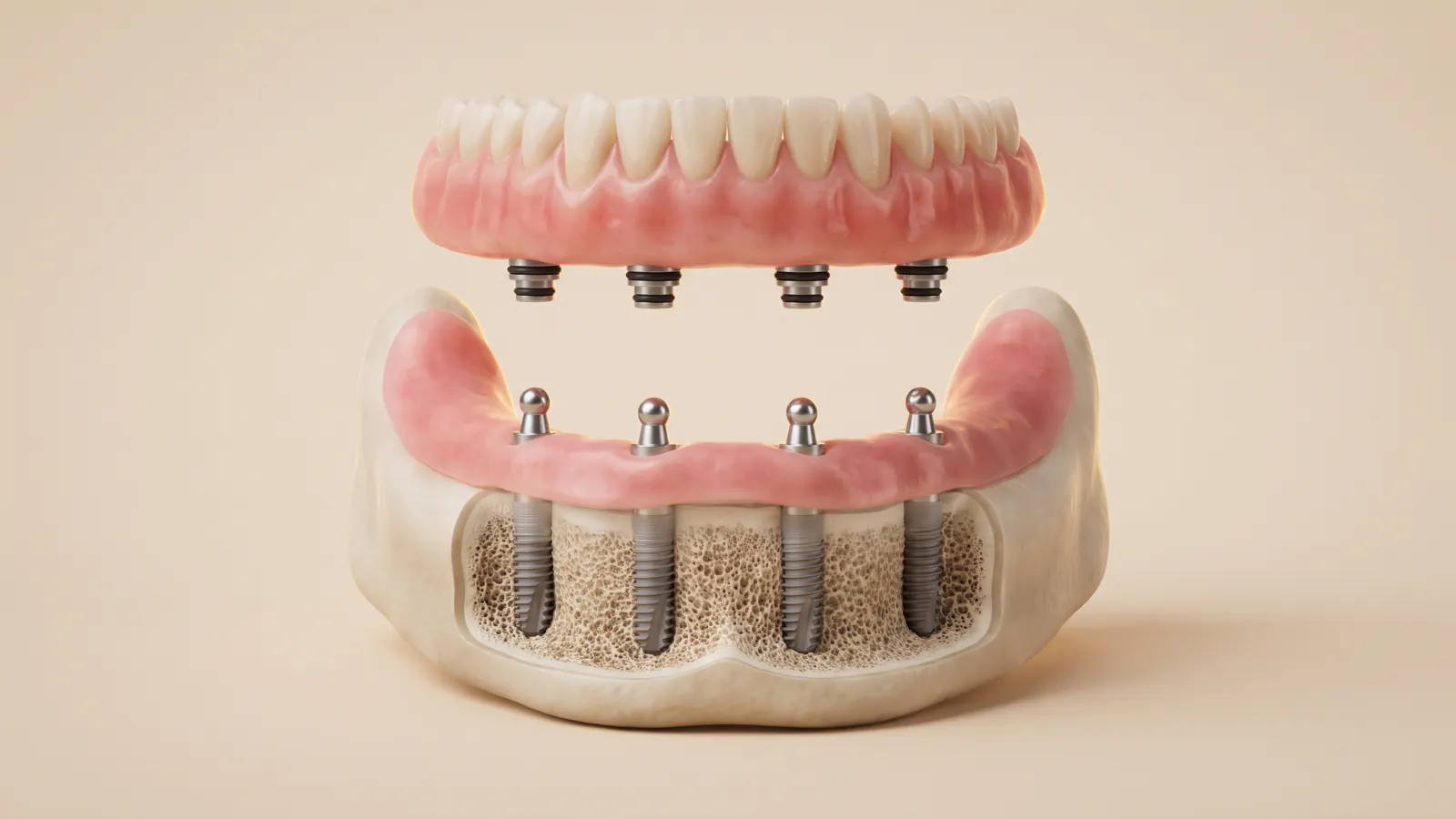
- Denture. Your full lower denture. It still comes out for cleaning.
- Housing with insert. Set into the underside of the denture. The replaceable insert snaps over the ball and wears with use.
- Ball head. The top of the one-piece implant, just above the gum.
- Mini implant. A titanium post under 3 mm wide, buried in the bone. A lower denture usually rests on four.
- Jawbone. A narrow ridge may take a mini implant where a standard post would need a graft first.
Who mini dental implants are for
Mostly denture wearers who want a firmer fit without major surgery.
- A lower denture that slips. Lower dentures have little to grip and often move when you talk or chew. This is where mini implants have the strongest track record.
- A narrow jawbone. After years without teeth the ridge of bone gets thinner. A mini implant may fit where a standard one would first need a bone graft.
- People who want to avoid a graft or a long surgery. Health, age or simple preference can make a shorter procedure with fewer steps the better plan.
- A small space for one tooth. A missing lower incisor or upper lateral incisor sometimes leaves too little room for a standard post.
- Someone who already has a denture they like. Often your current denture can be adapted to snap onto the implants rather than replaced.
When we suggest something else. Mini implants are a weaker fit for the upper jaw, where studies show they fail more often than in the lower jaw, and for people who grind their teeth hard. If you want fixed teeth that never come out, All-on-4 or full dental implants are better options. Uncontrolled diabetes, active gum disease and smoking need attention first, as with any implant.
How it works, visit by visit
There are fewer steps than with standard implants, but the follow-up matters just as much.
-
Exam and denture check
We examine your gums, take X-rays to measure the bone and check whether your current denture fits well enough to adapt. You get a written plan with the number of implants and the price.
First visit, complimentary
-
Placing the implants
Under local anesthesia the posts are placed in the jaw, usually four for a lower denture. Studies show that four fail less often than two.
One appointment
-
Fitting the denture
Housings are set into the denture so it snaps onto the implants. If the posts are stable enough this happens the same day; if not, you wear the denture as usual while the bone heals.
Same day or after healing
-
Follow-up and upkeep
We check the bite and the gums, and adjust the denture as the tissue settles. The inserts wear with use and are replaced when the denture starts to feel loose.
Regular checkups
What mini dental implants cost in Miami
Mini implants are priced at your consultation, after we have seen the X-rays and your denture. The main thing that moves the price is the number of implants, followed by whether your denture can be adapted or a new one has to be made.
Insurance coverage for implants varies by plan. Some plans pay part of the cost, others exclude implants; we check yours with you before treatment.
- Number of implants. Most lower dentures need four.
- Your denture. Adapting a well-fitting denture costs less than making a new one.
- Extractions. Any teeth that still need to come out are added to the plan.
- Upkeep. The inserts wear and are replaced from time to time.
Priced at your consultation. Financing is available through CareCredit and Alphaeon Credit.
- Complimentary consultation
- Financing available
- Insurance accepted for covered care
Mini dental implants vs regular implants
| Mini implants | Regular implants | |
|---|---|---|
| Width | Under 3 mm | Wider, in two or more parts |
| Procedure | Often through a small opening in the gum | Usually the gum is opened to reach the bone |
| Bone needed | Less width | More width, sometimes after a graft |
| Best use | Holding a lower denture | Single teeth, bridges, fixed full arches |
| Teeth on top | Removable denture that snaps on | Fixed crowns or bridges, or a denture |
| Upkeep | Inserts wear; denture repairs are common | Checkups and cleanings; crown replaced after many years |
Recovery and aftercare
- The first days. Expect some tenderness where the posts went in. It usually fades within a few days to a week, and over-the-counter pain relievers are enough for most people.
- Soft food at first. Stick to soft, cool food for the first days and build up slowly as the gums settle.
- Clean the implants and the denture. Brush the heads of the implants and the gum around them gently every day, and clean the denture and its housings separately.
- Watch the fit. When the denture starts to feel loose, the inserts are usually worn. They are replaced in a short visit.
- No smoking. Tobacco slows healing and raises the risk of losing an implant.
- Keep your checkups. Studies show repairs to the denture and its inserts are common with mini implants, so regular visits keep small problems small.
What patients ask before deciding
What is the difference between mini dental implants and regular implants?
Mini implants are narrower, under 3 mm, and usually made in one piece. They need less bone and a smaller procedure, and are used mostly to hold dentures. Regular implants are wider, carry more chewing force and are the standard choice for single teeth, bridges and fixed full arches.
How long do mini dental implants last?
There is less long-term research than for regular implants. A 2025 review of 39 studies found that about 91 percent of mini implants holding dentures were still in place after seven years, with better results in the lower jaw than the upper. The dentures on top often needed repairs and new inserts along the way.
Are mini dental implants painful?
They are placed under local anesthesia, so you should feel pressure but not pain. Because the procedure is smaller, the soreness afterward is usually mild and short, and over-the-counter pain relievers are enough for most people.
Can mini implants replace a full set of teeth?
They can hold a full denture in place, which is their most common use. The denture still comes out for cleaning. If you want a full arch of fixed teeth that stays in, standard implants such as All-on-4 are the usual option.
Is it worth getting dental implants at 70?
Age alone is not a reason to say no. Good general health and the ability to keep the implants clean matter more. For many people over 70, mini implants under a lower denture are attractive because they avoid bone grafts and need a shorter procedure.
Are mini dental implants removable?
The implants stay in the jaw. The denture snaps onto them and comes off when you want to clean it, then clicks back into place.
Does insurance cover mini dental implants?
Some plans pay part of the cost and others exclude implants or limit the yearly benefit. We accept insurance for the care your plan covers and check your benefits with you before treatment.
Related treatments
Your new smile starts with one visit.
Tell us what you would like to change and one of our doctors replies within 24 hours on working days.
- Phone
- 786 981 0655
- Emergencies
- 305 204 9231
- Hours
- Monday–Friday, 9 AM–6 PM. Saturday and Sunday closed.
Online consultation
Send us photos of your smile
Fill out the online consultation form, attach your photos and one of our doctors replies within 24 hours on working days.
Start your online consultation