

Restorative dentistry in Doral, Miami
White fillings in Miami, and when to replace silver ones
White fillings in Miami are tooth-colored composite fillings that repair decay or damage without metal. Many patients ask us to swap their old silver fillings for them. Sometimes that is the right call and sometimes the old filling is better left alone; we show you which at the exam.
- Material
- Mercury-free composite
- Visits
- Usually 1
- Old silver fillings
- Replaced only with a reason
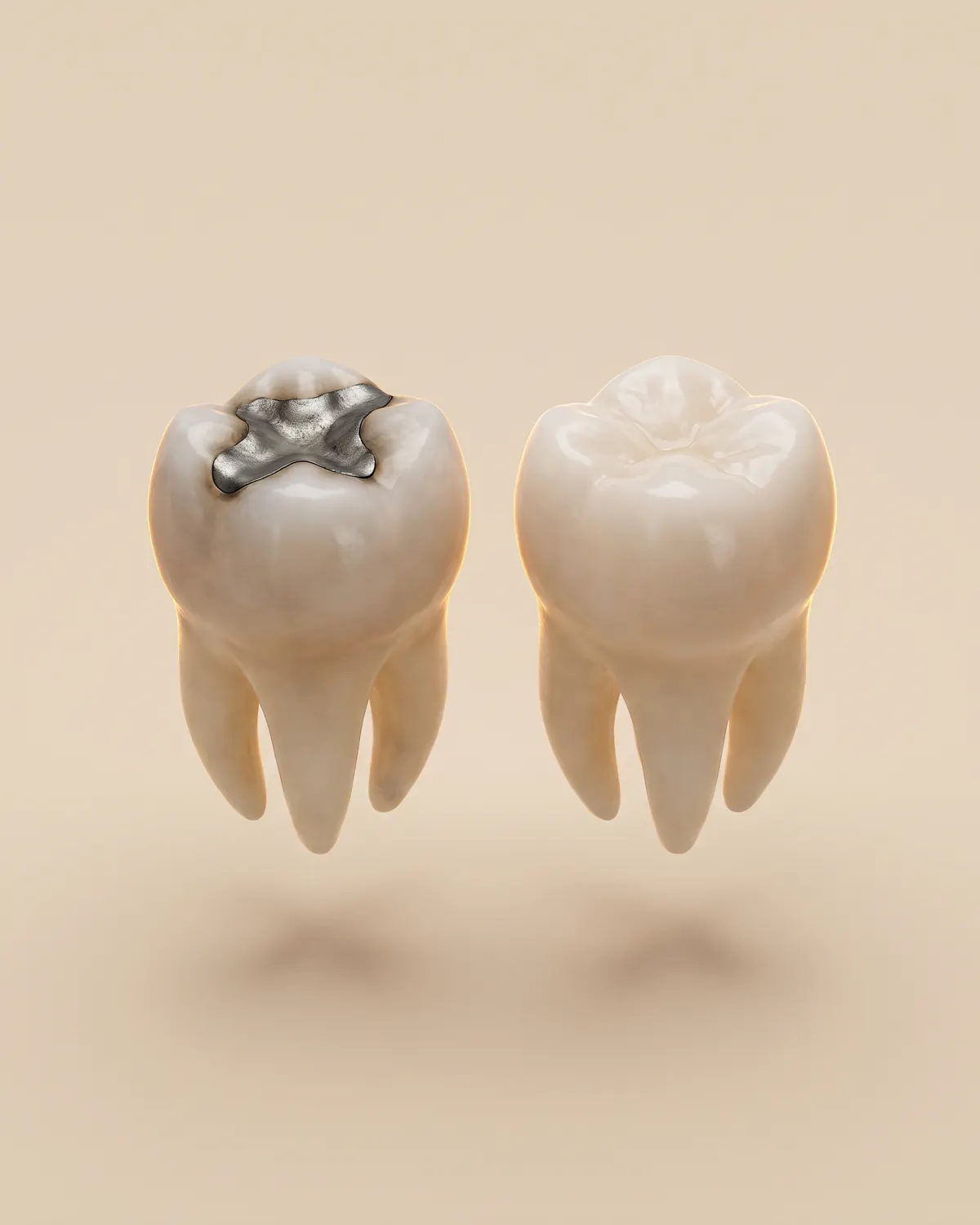
White fillings and silver fillings
A white filling is a composite resin, the same material described on our composite filling page. It is bonded to the tooth, built up in layers and hardened with a curing light, and its shade is matched to the teeth around it. A silver filling is dental amalgam, a mixture of mercury with silver, tin, copper and zinc.
For new fillings, composite has largely taken over. Amalgam accounted for about 6% of the restorative procedures paid by commercial dental insurance in 2024. The Indian Health Service plans to stop using it by 2027, and in July 2026 the federal Medicaid agency encouraged states to restrict coverage for it. Many adults still have silver fillings placed years ago, and what they want to know is whether to replace them.
The FDA and the ADA give the same answer. The FDA does not recommend removing amalgam fillings that are in good condition, because drilling out a sound filling takes healthy tooth with it and briefly raises exposure to mercury vapor. The chair of the ADA's Council on Scientific Affairs has said that removing serviceable amalgam only because it contains mercury is not supported by the evidence. So we replace a silver filling when there is a reason to, and we show you the reason.
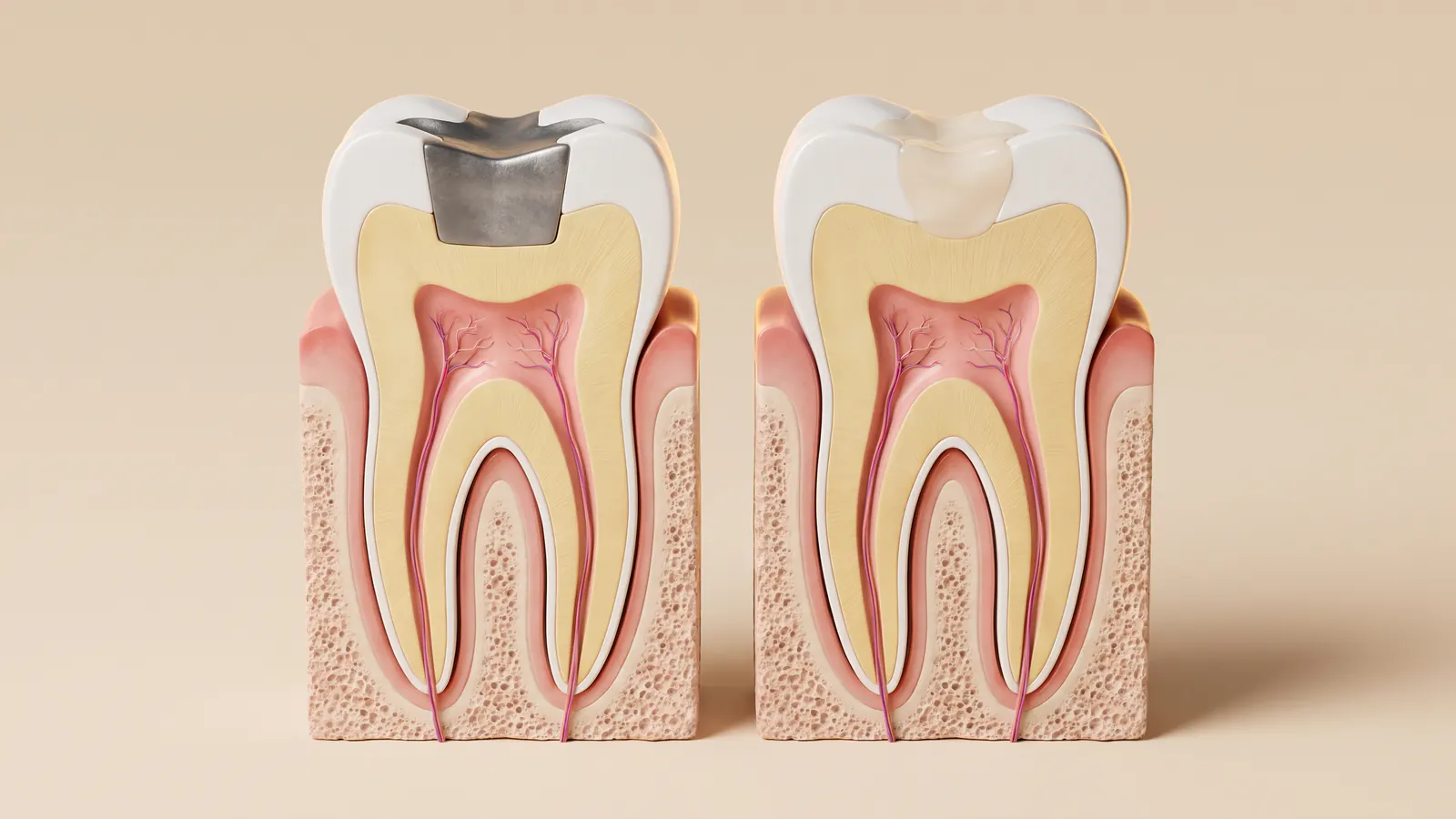
- Silver amalgam filling. Held in by the shape of the cavity, which is often cut deeper and squarer for it. It contains mercury.
- White composite filling. Bonded to the tooth, so the cavity can usually stay smaller. No mercury.
- Healthy dentin. Tooth that stays in place. Drilling out a sound filling removes some of it, one reason the FDA advises leaving good fillings alone.
- Pulp. The nerve and blood supply. If decay under an old filling reaches it, the tooth needs a root canal.
When replacing a silver filling makes sense
These are the reasons we would recommend it, each one visible on an X-ray, a photo or at the chair.
- The filling is broken or worn. A chipped edge, a gap or a filling that has worn down below the tooth around it.
- Decay at the edges or underneath. New decay around an old filling is one of the most common reasons any filling fails.
- A crack in the tooth. If the tooth around a large filling has cracked, it needs repair, and sometimes a stronger restoration than a filling.
- A metal allergy. A documented sensitivity to mercury or the other metals in amalgam is the case the FDA names for removing it.
- A new filling in a higher-risk group. For pregnant or nursing women, people planning a pregnancy, children under six and people with certain neurological or kidney conditions, the FDA encourages non-amalgam materials.
- It shows when you smile. If a silver filling on a visible tooth bothers you, replacing it is a fair choice. We explain first that every replacement removes a little more tooth.
When we suggest something else. A silver filling with no decay, no cracks and a tight edge is usually best left where it is. If the old filling is very large, composite may not be strong enough in its place, and an inlay, onlay or crown is the sturdier repair.
How a silver filling is replaced
An exam that checks every filling, then one appointment per tooth or small group of teeth.
-
Checking every filling
We examine each filling, take X-rays and photographs, and mark which ones need replacing and why. Fillings that are sound stay on the list as fillings to watch.
First visit
-
Numbing and removing the old filling
A local anesthetic numbs the tooth. We remove the amalgam and any decay beneath it, then look at the tooth underneath to confirm a filling is still the right repair.
Treatment visit
-
Bonding the white filling
We prepare the tooth surface so the resin bonds to it, then place the composite in layers, hardening each one with the curing light. The shade is chosen against your own teeth.
Same visit
-
Shaping and polishing
We shape the filling, check your bite and polish it to the sheen of the enamel around it. If more fillings need replacing, we book the next teeth.
Same visit
What white fillings cost in Miami
A white filling is priced by its size, the number of surfaces it covers and the tooth it is on. The ADA notes that composite costs more than amalgam. Insurance plans generally treat fillings as restorative care, but coverage varies, and a replacement done only for appearance may not be covered, so we check your plan with you before treatment. For financing, we accept CareCredit and Alphaeon Credit.
What changes the price
- Size and surfaces. A small one-surface filling costs less than one that wraps around the tooth.
- How many teeth. Replacing several silver fillings adds up, so we plan them in order of need.
- What is underneath. Decay or a crack found under an old filling can change the repair.
- Your insurance. Whether your plan covers a replacement depends on the reason for it.
Priced at your consultation. Financing through CareCredit and Alphaeon Credit.
- Free first consultation
- CareCredit and Alphaeon Credit
- Insurance accepted for covered care
Silver or white?
| Silver amalgam | White composite | |
|---|---|---|
| Color | Silver, darkens with time | Matched to the tooth |
| Mercury | Contains mercury | None |
| How it stays in | Held by the shape of the cavity, which often means cutting deeper | Bonded to the tooth, so less tooth usually has to go |
| How long it lasts | Higher survival in studies | Replaced more often in studies, mostly because of new decay |
| Placement | Faster | Slower; the tooth must stay dry |
| Relative cost | Usually lower | Usually higher |
| FDA guidance | Higher-risk groups should avoid it when possible | One of the alternatives the FDA suggests |
Recovery and aftercare
- Whiten first, fill second. Whitening lightens natural teeth only, not fillings. If you plan to whiten, do it before we match the shade of new white fillings.
- The first days. Mild sensitivity to cold or a sore gum is normal and usually fades within a week or two.
- Eating. The filling is hard before you leave. Wait for the numbness to wear off before you chew.
- Daily care. Brush twice a day with fluoride toothpaste and floss daily, paying attention to the edges of each filling.
- Hard things. Ice, pen caps and opening packages with your teeth can chip a filling. A night guard helps if you grind.
- Regular checkups. Small problems at the edge of a filling are easier to fix when they are found early.
What patients ask before deciding
Is it worth replacing silver fillings?
Only when there is a reason: the filling is broken, has decay around it, the tooth has cracked, you have a metal allergy, or it shows and bothers you. The FDA does not recommend removing amalgam fillings in good condition, because removal takes healthy tooth and briefly raises mercury vapor exposure.
Do silver fillings last longer than white fillings?
In studies, yes, on average. The ADA says amalgam shows higher survival than composite, and composite fillings are replaced more often, mostly because of new decay at the edges. A well-placed white filling in a mouth that is cared for can still last many years.
Are silver fillings dangerous?
For most people, no. The National Institute of Dental and Craniofacial Research says studies show amalgam is safe for most people. The FDA advises certain higher-risk groups to avoid new amalgam when possible, and it does not recommend removing sound fillings.
Do dentists still use silver fillings?
Less and less. Amalgam accounted for about 6% of restorative procedures paid by commercial insurance in 2024, the Indian Health Service plans to stop using it by 2027, and a 2025 international agreement calls for phasing it out by 2034, with exceptions where a dentist judges it necessary.
Can white fillings be whitened?
No. Whitening works on natural enamel, not on fillings, crowns or veneers. If you whiten after getting white fillings, the fillings may look darker than the teeth around them and need replacing to match. That is why we suggest whitening first.
Will insurance pay to replace my silver fillings?
Often, when there is a clinical reason such as decay or a broken filling. A replacement done only for appearance may not be covered. We accept insurance for the care your plan covers and check it with you before treatment.
Do white fillings cost more than silver fillings?
Usually, yes. The ADA notes that composite costs more than amalgam and takes longer to place, because the tooth has to stay clean and dry while the resin goes in. We price each filling at your consultation.
Related treatments

Your new smile starts with one visit.
Tell us what you would like to change and one of our doctors replies within 24 hours on working days.
- Phone
- 786 981 0655
- Emergencies
- 305 204 9231
- Hours
- Monday–Friday, 9 AM–6 PM. Saturday and Sunday closed.
Online consultation
Send us photos of your smile
Fill out the online consultation form, attach your photos and one of our doctors replies within 24 hours on working days.
Start your online consultation