

Restorative dentistry in Doral, Miami
Composite filling in Miami, matched to your tooth
A composite filling in Miami repairs a tooth damaged by decay, a chip or wear with a tooth-colored resin that bonds to it. At our Doral office it is usually done in one visit, under local anesthetic, and shaded so the repair is hard to spot.
- Visits
- Usually 1
- Material
- Tooth-colored resin
- Numbing
- Local anesthetic
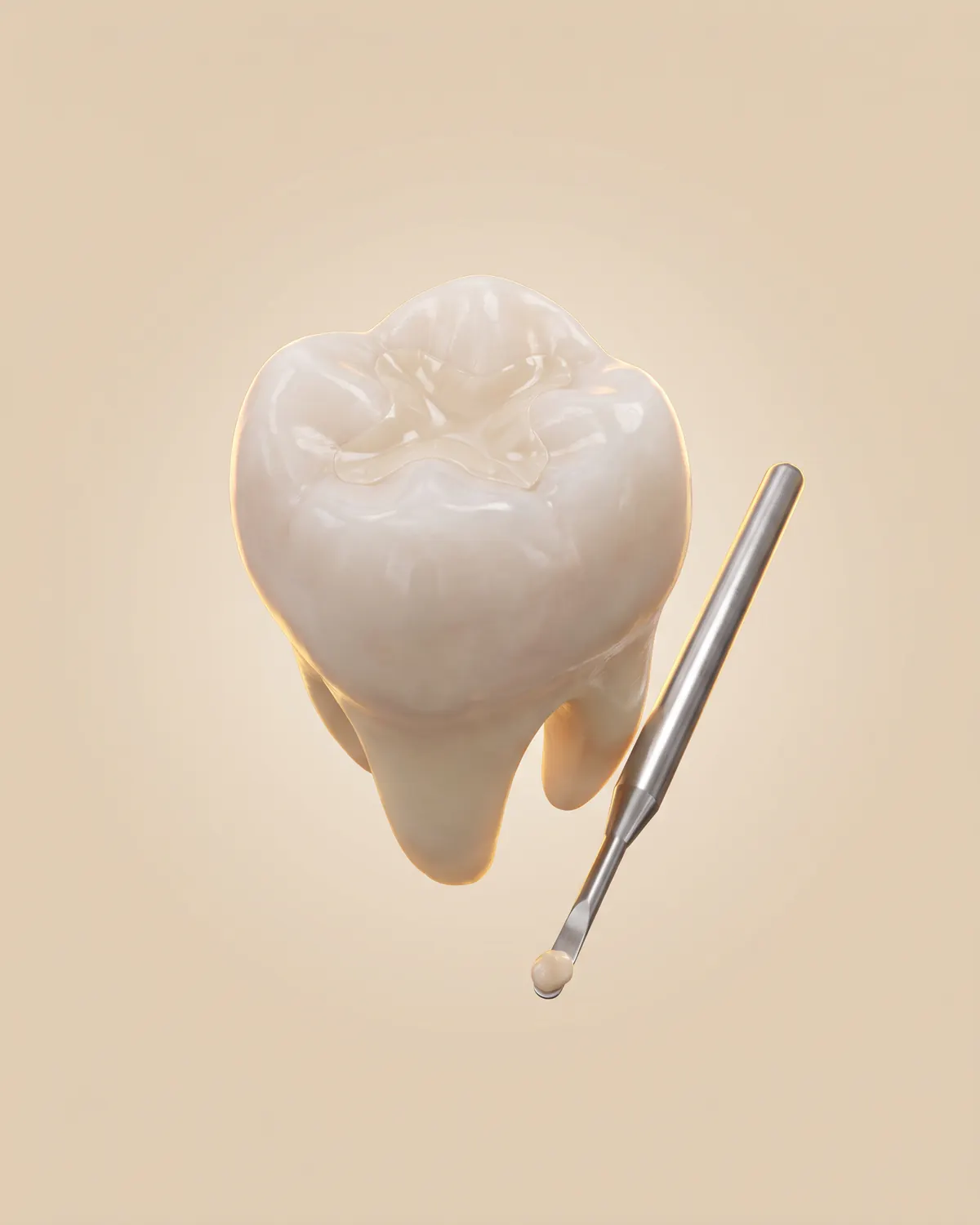
What a composite filling is
Composite is a tooth-colored resin: a plastic base mixed with fine particles of glass or quartz. After the decay or damaged part of the tooth is removed, the dentist places the resin straight into the space, sculpts it and hardens it with a blue curing light. Because composite bonds to enamel and dentin, it does not depend only on the shape of the hole to stay in, so less healthy tooth usually has to go than with a metal filling.
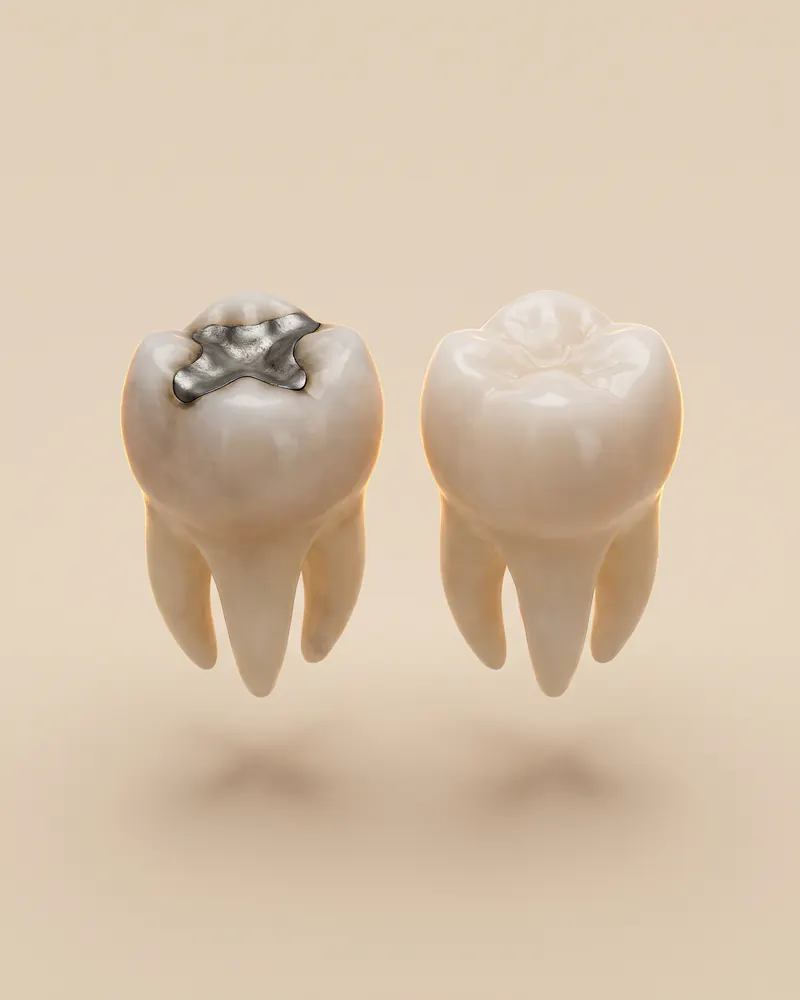
The American Dental Association describes composite as suited to small and medium fillings that handle moderate chewing pressure, on front or back teeth. Appearance is the main reason it is now used far more than silver amalgam or gold. It has drawbacks too. Composite can wear and need replacing sooner than amalgam, it costs more, and it takes longer to place, because the tooth has to stay clean and dry while the material goes in.
Composite fillings and white fillings are the same material. If you already have silver fillings and want to know whether to swap them, our page on white fillings and replacing silver fillings covers that question.
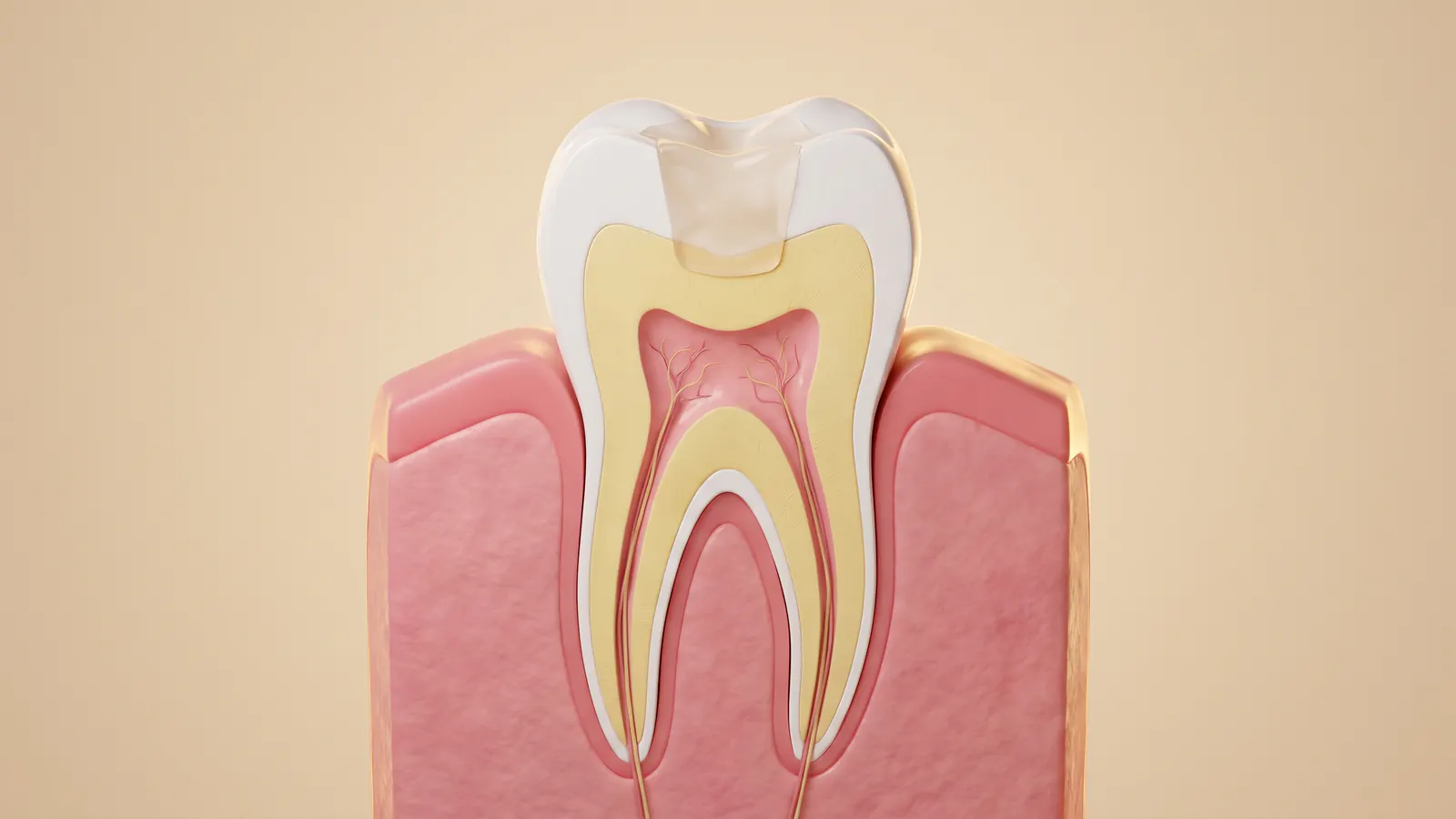
- Composite filling. Tooth-colored resin placed in layers, each hardened with a curing light, and bonded to the walls of the cavity.
- Enamel. The hard outer layer. The shade of the resin is chosen to match it.
- Dentin. The layer under the enamel. A filling suits small and medium cavities that leave healthy dentin between the decay and the nerve.
- Pulp. The nerve and blood supply. If decay reaches it, the tooth needs a root canal before it is restored.
When composite is the right repair
Composite works best when there is enough healthy tooth left around the repair.
- Small and medium cavities. Decay that has reached the enamel or the dentin beneath it, but not the nerve.
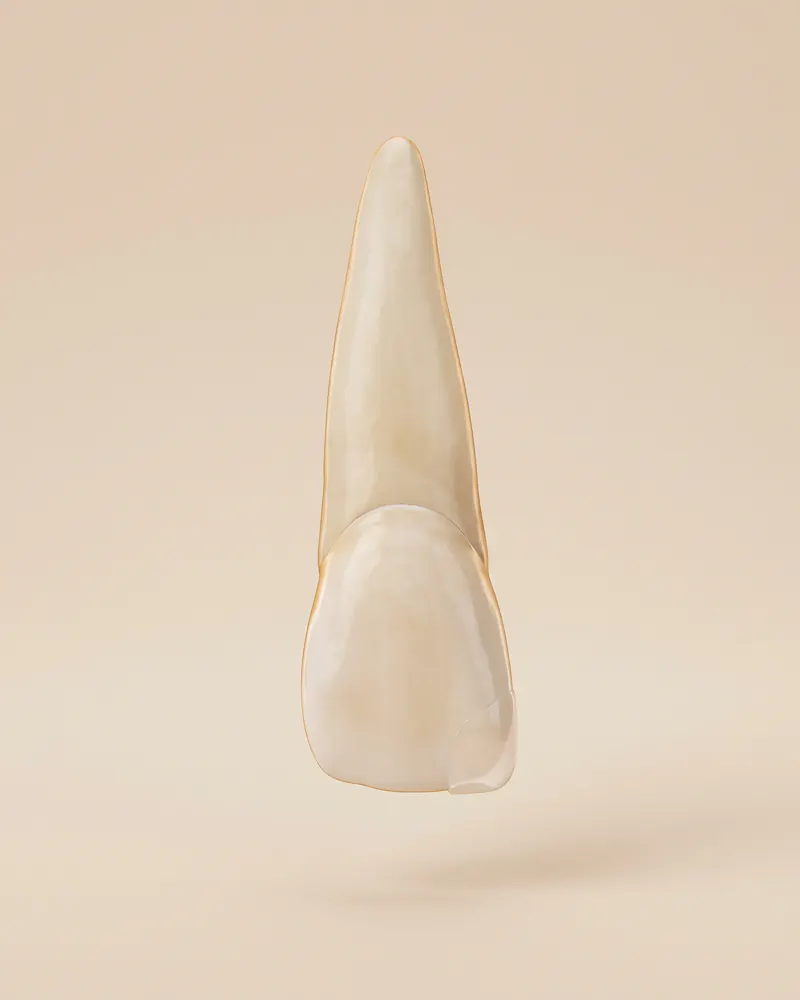
- Chipped or cracked teeth. Small breaks from biting something hard, filled and shaped back to the line of the tooth.
- Teeth broken by a knock. A corner lost in a fall or a sports injury, when the tooth itself is still sound.
- Worn edges. Teeth flattened or thinned by years of use, rebuilt so they bite properly again.
- Front teeth. Composite can be layered and polished to match the shade and translucency of the teeth beside it. Small gaps can be closed the same way with teeth bonding.
- Old fillings that have failed. A filling that has cracked, leaks or has new decay at its edges can be replaced with composite.
When we suggest something else. If decay has reached the pulp, the nerve inside the tooth, it needs a root canal first, and often a crown after it. If so much of the tooth is gone that a filling would not hold, an inlay, onlay or crown made in a lab is the stronger repair. If a tooth cannot be saved, we go through the replacement options with you, implants included.
How a composite filling is done
Most composite fillings take a single appointment.
-
Exam and X-rays
We look at the tooth and take X-rays to see how far the decay or the crack goes. You get the plan and the fee before treatment starts.
Before treatment
-
Numbing and cleaning out the tooth
A local anesthetic numbs the tooth and the gum around it. We remove the decay and any weak tooth, then clean the space. If the decay came close to the nerve, a protective liner goes in first.
Same visit
-
Building the filling
We choose the shade against your own tooth, then place the resin in thin layers and harden each one with the curing light. Layering lets us copy the way a natural tooth is more translucent at the biting edge and deeper in color near the gum.
Same visit
-
Shaping, bite check and polish
We shape the filling to the tooth, check your bite with marking paper and adjust any high spot, then polish the surface so it has the same sheen as enamel.
Same visit
What a composite filling costs in Miami
The fee for a composite filling depends mostly on how many surfaces of the tooth it covers and where in the mouth the tooth is. The ADA notes that composite costs more than silver amalgam, and that some insurance plans do not always cover it. We price your filling at the consultation, after the exam and X-rays, and check your coverage with you before you commit.
What changes the price
- Surfaces covered. A filling on one surface costs less than one that wraps around two or three.
- Which tooth. Back molars are larger and harder to reach than front teeth.
- Size of the damage. A deep cavity takes more time and material than a shallow one.
- A root canal first. If decay reached the nerve, that treatment is added.
- Sedation. If you choose sedation on top of the local anesthetic, it adds to the fee.
- Your insurance. Fillings are restorative care, which many plans cover in part.
Priced at your consultation, with financing available.
- Free first consultation
- Financing available
- Insurance accepted for covered care
Composite, amalgam or ceramic?
| Composite | Silver amalgam | Ceramic inlay | |
|---|---|---|---|
| Color | Matched to the tooth | Silver, darkens with time | Matched to the tooth |
| Visits | One | One | Usually two, made in a lab |
| How it stays in | Bonded to the tooth | Held by the shape of the cavity | Bonded or cemented |
| Durability | Good for small and medium fillings; replaced more often than amalgam in studies | Higher survival in studies | Durable for larger repairs |
| Relative cost | More than amalgam | Usually the lowest | Usually the highest |
| Mercury | None | Contains mercury | None |
Recovery and aftercare
- Eating. The resin is already hard when you leave, but wait until the numbness wears off so you do not bite your cheek or tongue.
- Sensitivity. Some sensitivity to cold or sore gums is normal and usually goes away within a week or two.
- A high bite. If the tooth hurts when you bite down after a few days, call us. A small adjustment usually fixes it.
- Daily care. Brush twice a day with fluoride toothpaste and floss once a day, around the filling as well as everywhere else.
- Stains. Coffee, tea, red wine and tobacco can darken composite over time. Rinsing with water after them helps.
- Grinding. If you clench or grind at night, a night guard protects the filling and the teeth around it.
What patients ask before deciding
How long do composite fillings last?
No filling lasts forever. In research funded by the National Institute of Dental and Craniofacial Research on more than 700,000 tooth-colored fillings, 16% failed within five years, mostly from new decay or a broken tooth. Size, location, your brushing and habits like grinding all affect how long yours lasts.
How much is one composite filling?
It depends on how many surfaces it covers, which tooth it is on and how deep the damage goes. We give you the fee at your consultation, after the exam and X-rays, and check what your insurance pays before you decide.
What are the downsides of composite fillings?
Composite can wear faster than amalgam and may need replacing sooner. It takes longer to place, costs more and can pick up stains from coffee, tea or tobacco. Very large cavities are better served by an inlay, onlay or crown.
What is the healthiest tooth filling to get?
There is no single answer. The ADA and the FDA consider amalgam safe for most people, but the FDA recommends that higher-risk groups avoid it when possible: pregnant or nursing women, children under six and people with certain neurological or kidney conditions or a mercury allergy. For them it suggests composite or glass ionomer.
Is getting a composite filling painful?
The tooth is numbed with a local anesthetic, so you should feel pressure and vibration rather than pain. Once the numbness wears off, mild sensitivity for a week or two is normal. Pain that lingers or throbs needs a check.
Can I eat right after a composite filling?
Yes. The curing light hardens the resin before you leave, so the filling is set. Waiting until the numbness wears off keeps you from biting your cheek or tongue.
Can composite be used on front teeth?
Yes. Composite is used on front and back teeth. On front teeth it is layered to match the shade and translucency of the neighboring teeth, which is why it is the usual choice there.
Related treatments
Your new smile starts with one visit.
Tell us what you would like to change and one of our doctors replies within 24 hours on working days.
- Phone
- 786 981 0655
- Emergencies
- 305 204 9231
- Hours
- Monday–Friday, 9 AM–6 PM. Saturday and Sunday closed.
Online consultation
Send us photos of your smile
Fill out the online consultation form, attach your photos and one of our doctors replies within 24 hours on working days.
Start your online consultation